Category Archives: Uncategorized

Hui Zhen visits UK museums to study Singapore insect collections

From 22 to 27 October, Hui Zhen was in England to collect historical specimen records of local stick insect species from two scientific institutions.

The first stop: Natural History Museum, London. Hui Zhen met curators Dr. Ben Price (Senior Curator in Charge, small orders) and Judith Marshall (retired Curator of Entomology) who gave her a comprehensive introduction to their collection. Hui Zhen had the great opportunity to access sizeable records from Singapore, with some dating back to the 1850s. Several specimens were collected by H. N. Ridley in the 1890s and early 1900s, and who was then Director of the Singapore Botanic Gardens. Hui Zhen also had the opportunity to speak to Dr. Blanca Huertas (Senior Curator, Lepidoptera) regarding the butterfly collection and discussed plans to incorporate the museum’s immense number of records into our lab’s ongoing Singapore extinctions project.

Next stop: Oxford University Museum of Natural History. An hour by train away from London, the Oxford Museum similarly holds a rich collection of Southeast-Asian insects. Ms. Amoret Spooner (Collections Manager) walked Hui Zhen through the collection and provided many helpful tips on navigating the collection. The collection at Oxford filled the information gaps in some of the rarer taxa.

In all, it was a rewarding and eye-opening trip to England.

Tak visits James O’Dwyer’s lab at the University of Illinois

From 11 to 22 September, Tak visited collaborator James O’Dwyer and his lab at the University of Illinois at Urbana-Champaign. During the visit, Tak interacted with James and members of his lab, including his two post-docs Rafael D’Andrea and Mario Muscarella, as well as his three graduate students Alice Doucet Beaupré, Stacey Butler and Nick Sutton. There were fruitful exchanges between James, Rafael and Tak on developing a size-structured version of a neutral model, which has been found to give species-abundance distributions with a power-law form under certain scenarios. They explored possible extensions to a recent paper on this topic (D’Andrea & O’Dwyer, 2017), including application to dynamics of the frequencies of human names (O’Dwyer & Kandler, in review). The visit also provided a good opportunity for Tak to learn more about the work being done in James’s lab, which is at the forefront of theoretical ecology and evolution.

In addition, Tak presented a seminar on recent work he had been involved in, which is to do with extending neutral models to include random differences in species demographic rates, in a parsimonious way. These random differences could represent species-specific responses to changes in environmental conditions. Incorporation of these differences into neutral models can explain a greater number of biodiversity patterns in tree communities, especially patterns that incorporate changes over time. Tak received constructive and insightful feedback during the seminar. Furthermore, Rick Condit visited the O’Dwyer lab for one day and this enabled mutually beneficial exchanges between Rick, Tak and members of the lab on mechanisms sustaining patterns of biodiversity in tree communities. Rick also gave a seminar on new work that he has done on drivers of patterns of beta-diversity in Panama, which generated lively exchanges.

IMG_4683.JPG


Catharina attends SAGE 2017 in Bogor, Indonesia

Catharina went to the Third International Conference on Southeast Asian Gateway Evolution (SAGE 2017) in Bogor, Indonesia from 28 August to 1 September 2017. She co-organized a symposium titled “New Biomonitoring Techniques” with Prof. Rudolf Meier. The symposium covered topics including eDNA (Rudolf Meier), camera trapping (Reuben Clements) and acoustic monitoring (Catharina). The symposium also included fascinating talks on drones and soundscapes. Karlina Indraswari from the Ecoacoustics research group at Queensland Institute of Technology delivered an engaging talk on soundscapes and analyzing soundscape data, which saw her awarded with second place in the oral presentation awards.

Link for the ecoacoustics group : http://research.ecosounds.org


Tak visits Kasetsart University in Thailand

From 14–20 August, Tak visited collaborator Dr Wirong Chanthorn, who works at Kasetsart University in Bangkok. During the visit, they discussed issues related to work that they have been doing recently on nitrogen-fixing trees. These trees can be an important source of nitrogen for forest communities. Tak and Wirong examined patterns of abundance of nitrogen-fixing trees across different forest plots in Thailand. In addition, Tak gave a 2 hr seminar on the work he has done in theoretical ecology, including work demonstrating the importance of temporal environmental variability in affecting forest dynamics and biodiversity. After the seminar, Tak gave a 1 hr workshop based on some of the dynamic models he has used.

Tak and Wirong also visited a lowland mixed deciduous forest in Namtok Sam Lan National Park, as well as the Mo Singto forest plot in Khao Yai National Park; both are located outside of Bangkok. The Mo Singto plot is part of the international forest plot network administered by the Center for Tropical Forest Science-Forest Global Earth Observatory (CTFS-ForestGEO) network, and is located in a broad-leaved, seasonal evergreen forest. Wirong and three staff members showed Tak some of the main flora and fauna in the forests. The two principal investigators of the Mo Singto plot are Anuttara Nathalang and Warren Brockelman, and Tak met both of them in Bangkok.

New grant on island biogeography of birds led by Frank Rheindt’s lab

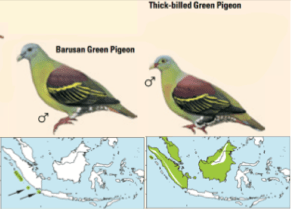
Our lab will collaborate on a new grant awarded to Frank Rheindt’s lab, looking at island biogeography of birds in Southeast Asia. We will seek to understand the factors that have structured bird diversity in the region over the last ~2 million years, using field data and molecular data from Frank’s lab to test the predictions of theoretical models from our lab.

Southeast Asia has a unique biogeographical history, which has left a strong signature on the region’s flora and fauna. Fluctuating sea levels have periodically exposed the shallow continental shelf, during which times many of the region’s islands have been connected to the mainland. Compared to continuously isolated islands, islands that have been connected in the past tend to have more species overall but fewer endemic species.

The grant is a Tier 2 grant awarded by Singapore’s Ministry of Education.

This slideshow requires JavaScript.

doves2

These two study species are closely related, but the Barusan Green Pigeon tends to occur on long-isolated islands, whereas the Thick-billed Green Pigeon tends to occur on the Southeast Asian mainland and islands that have been recently connected to it.

Ecological Society of America annual meeting in Portland, Oregon, USA

Ryan recently attended the Ecological Society of America’s annual meeting, which this year was held in Portland, Oregon. Roughly five thousand people were in attendance. Ryan presented the lab’s work on island biogeography in a session titled “Turn and Face the Strain: Changing Signatures of Niche Processes in Disease and Community Diversity” that aimed to establish links between models in community ecology and models in disease ecology.

The successful conference was marred only by haze drifting down from fires in British Columbia and Washington state, leading to polluted air in Portland reminiscent of that in Singapore during Indonesia’s burning season.

haze_Portland

Haze in Portland, August 2017


IMG_8562

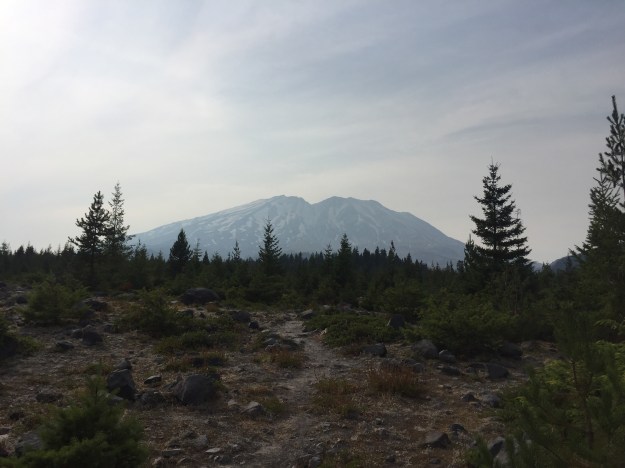
Mount St. Helens, to the north of Portland, shrouded in a light haze

International Congress for Conservation Biology in Cartagena, Colombia

Last week Ryan attended the International Congress for Conservation Biology (ICCB) in the historic city of Cartegana, Colombia. This conference brought together over 2,000 people to discuss global conservation issues. Ryan presented the lab’s work on extinctions in Singapore as part of a session titled “What are we willing to lose? Reframing adequacy to achieve conservation outcomes”.

2017-07-27-PHOTO-00007968

Two students join the lab for summer internships

Two students have joined our lab this summer for internships.

Laura Berman is a recent graduate of Juniata College in the US. For her internship she is working with David Tan and Nadiah Kristensen on the undetected extinctions project. She is compiling a database of all of the records of reptiles and freshwater decapods known from Singapore based on the specimen catalogue of the Lee Kong Chian Natural History Museum as well as archived journal articles in order to find the complete list of dates that each species has been recorded in Singapore. She is also updating specimen records at the National Herbarium and adding missing specimens to the BRAHMS database so that a similar list can be compiled for the plants of Singapore. This information will be used to calculate the number of species that went extinct in each taxonomic group, and also to estimate statistically the number of undetected extinctions—extinctions of species that occurred before the species could even be discovered.

Phua Yu Ning is an undergraduate majoring in Physics and Applied Physics at Nanyang Technological University. She is working with Tak Fung on modelling the biodiversity and biogeography of small islands. She is learning to analyse the stochastic master equations of the Unified Neutral Theory of Biodiversity and Biogeography and related theories to predict archipelago species–area curves for taxa including plants, birds, insects and mammals.

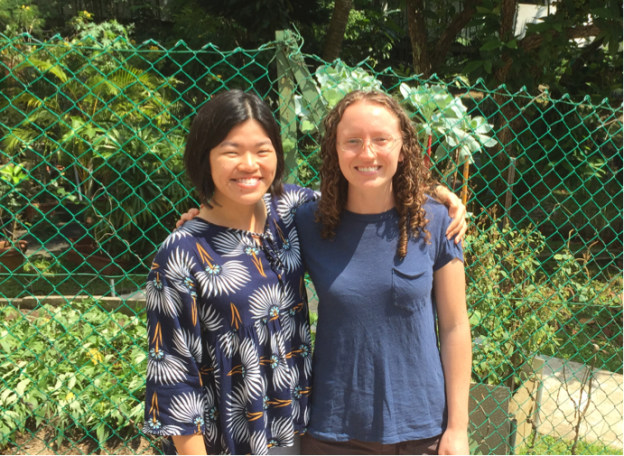
Yu_Ning_and_Laura

Yu Ning and Laura


British Ecology Society Macroecology annual meeting in London

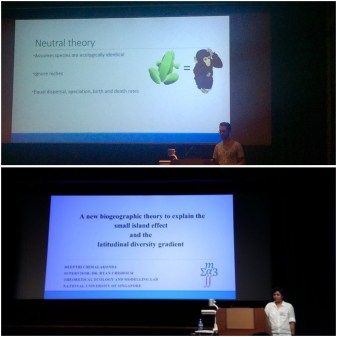
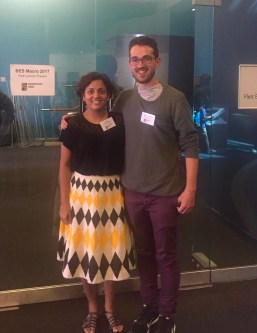
Last week Sam and Deepthi attended the British Ecological Society Macroecology conference held at the Natural History Museum in London, UK. Sam presented his work on building spatially explicit neutral models at very large scales and the importance of long distance dispersal. Deepthi talked about her ongoing PhD work that examines diversity maintenance mechanisms on islands and the role of immigration in shaping latitudinal diversity gradients.

Both of them got a ‘behind-the-scenes’ tour of the spirit collection and the fossil mammal collection at the museum. They saw a giant squid, a Toxodon, and some of Darwin’s personal collections. They also learnt about evidence of cannibalism from early human fossils.

IMG_5839.jpgIMG_5835.jpg

IMG_20170707_162526.jpg

Giant squid at the Natural History Museum