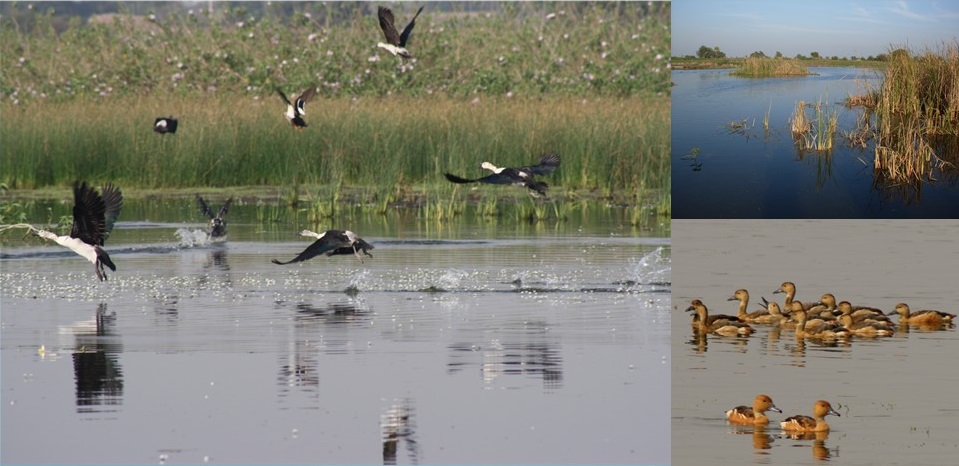
Deepthi received a grant from the Ruffords Foundation, a UK based charity, that will support her PhD field work conducting water bird surveys in artificial wetlands of Peninsular India. She will also use this grant money to conduct workshops and training sessions for local communities in order to establish a long-term avian monitoring and conservation program.
Author Archives: ryanchisholm
Tak’s paper on biodiversity loss and fish production published in Nature Communications
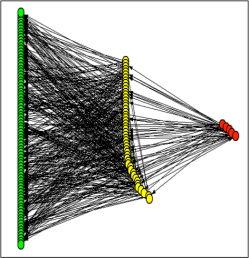
Fish provide essential minerals and proteins for humans, but unsustainable fishing practices have to led to severe declines in fish populations and loss of fish species at local and regional scales. A better understanding of how this species loss affects fish production in marine communities is important for better fisheries management. In Tak’s new paper, dynamic food-web models were used to examine how species loss affects fish production under a variety of scenarios of species loss. Fish production followed a unimodal relationship or a monotonic concave or convex decline with species loss; interestingly, prey of deleted species tended to respond with an increase in production, thus mitigating loss of production in the deleted species.

Photo credit: National Oceanic and Atmospheric Administration/Department of Commerce; Danilo Cedrone; United Nations Food and Agriculture Organization

Trophic connections in an example food web generated using the model in the paper
Honours students’ theses submitted
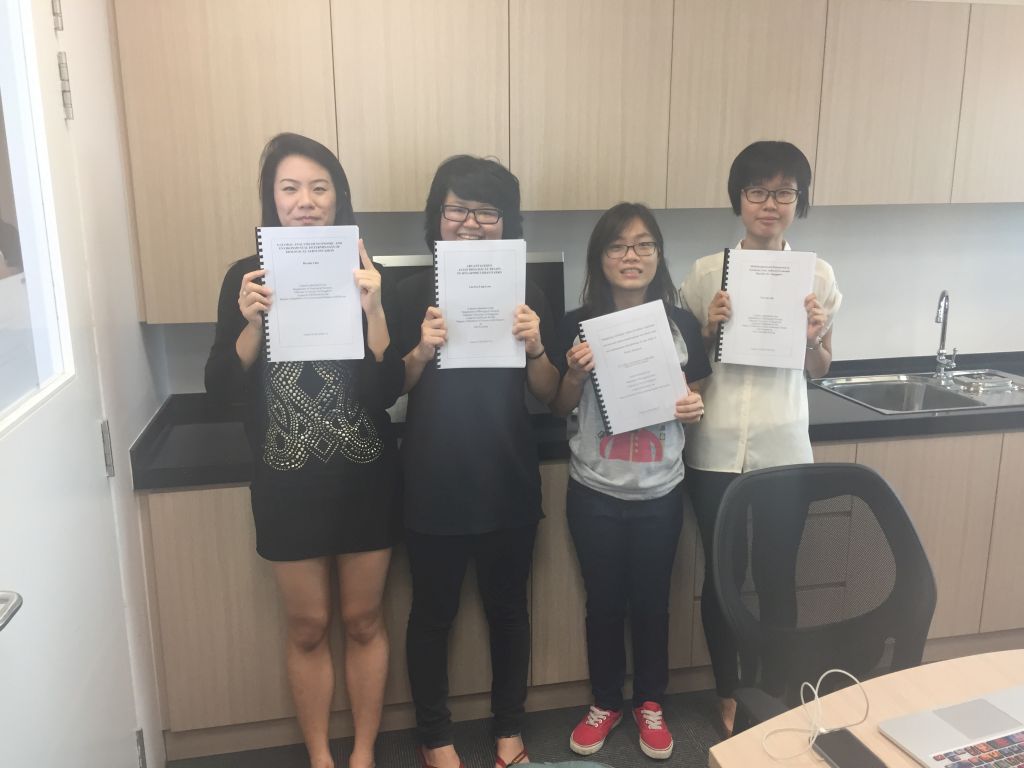
Brenda, Lena, Jessica and Xue Qin have submitted their Honours theses. Brenda analysed patterns of species invasion in cities and nature reserves across the world. Lena examined whether particular traits make bird species more adaptable to urban parks in Singapore. Jessica conducted an analysis of ecosystem services in Sabah, Malaysia. Xue Qin estimated the indirect economic value of Southeast Asian ecotourism to Singapore. Congratulations to all of them!
Association for Tropical Biology & Conservation (Asia-Pacific Chapter) meeting in Phnom Penh
The annual meeting of the Asia-Pacific Chapter of the Association for Tropical Biology & Conservation was held in Phnom Penh from 30 March to 2 April. Ryan give a plenary talk “Mathematics in the jungle: informing tropical conservation with quantitative theory”, emphasising in particular the need for a greater focus on mathematics in biology curricula in the Asia-Pacific region.
Seminars and workshops at the Indian Institute of Science
Ryan visited Vishu Guttal’s lab at the Indian Institute of Science in Bangalore to present a seminar and give workshops on forest modelling. He also presented a seminar at the National Centre for Biological Sciences and visited the Mudumalai Center for Tropical Forest Science plot with H. S. Suresh and collaborators. Mudumalai was the third CTFS plot established (in 1987) and is unique in that it is subject to regular disturbance by elephants and fire.
New paper on grassland dynamics published in Theoretical Ecology
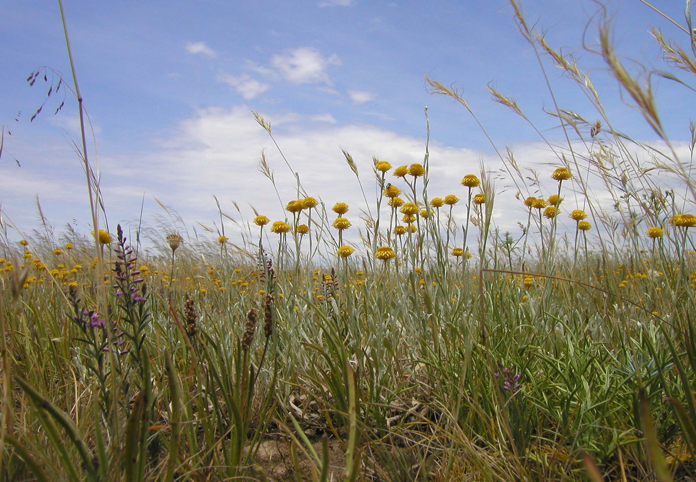
Native grasslands across the world are subject to exotic weed invasion, over-fertilisation and other threatening processes. Effective restoration and management of grasslands depends on our ability to understand these processes and their interactions. In our new paper, we use mathematical models to explore how exotic invasion and fertilisation can interact to drive and maintain undesirable exotic-dominated states. Interestingly, we find a broad range of conditions under which alternate stable states are possible, implying that invasions, once they occur, can be very difficult to reverse.
Jessica and Deepthi meet with wildlife and forestry officials in Sabah, Malaysia
As part of Jessica’s Honours thesis on mapping ecosystem services in Sabah, Jessica and Deepthi made a trip to meet officials from state departments including the Sabah State Water Department, Sabah Parks, Sabah Wildlife Department, and the Sabah Forestry Department. Each department has a specific role in protecting and conserving the watershed, wildlife, and forests of Sabah.
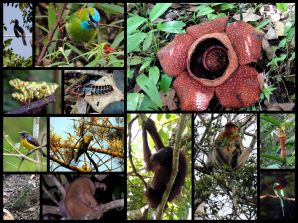
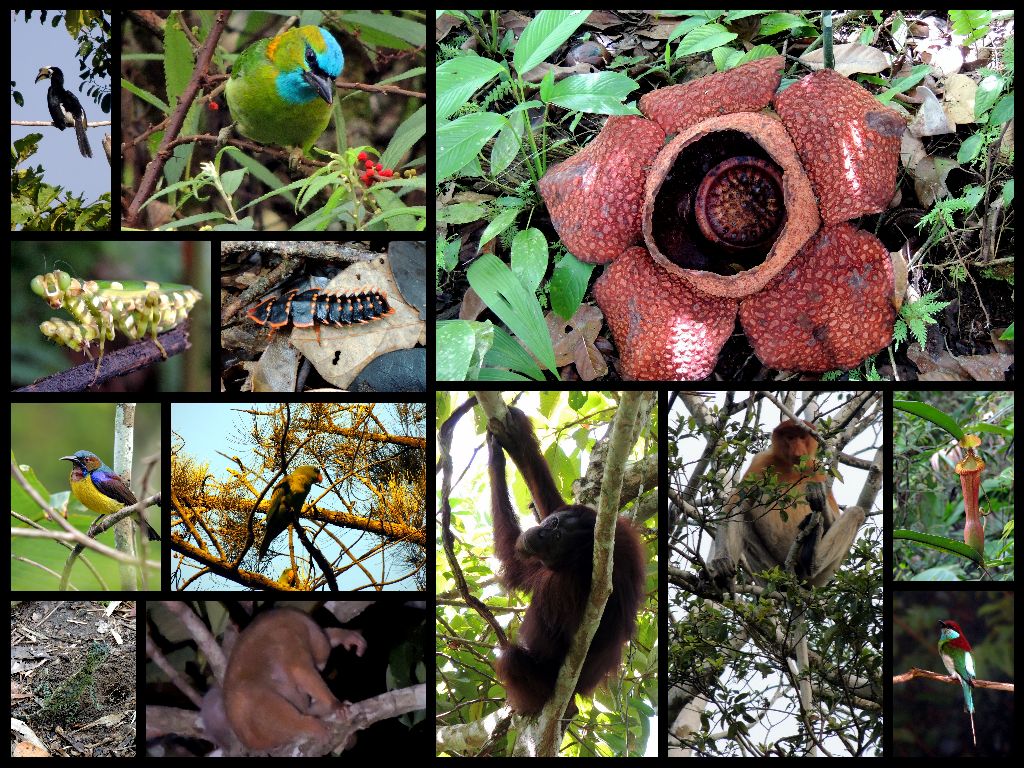
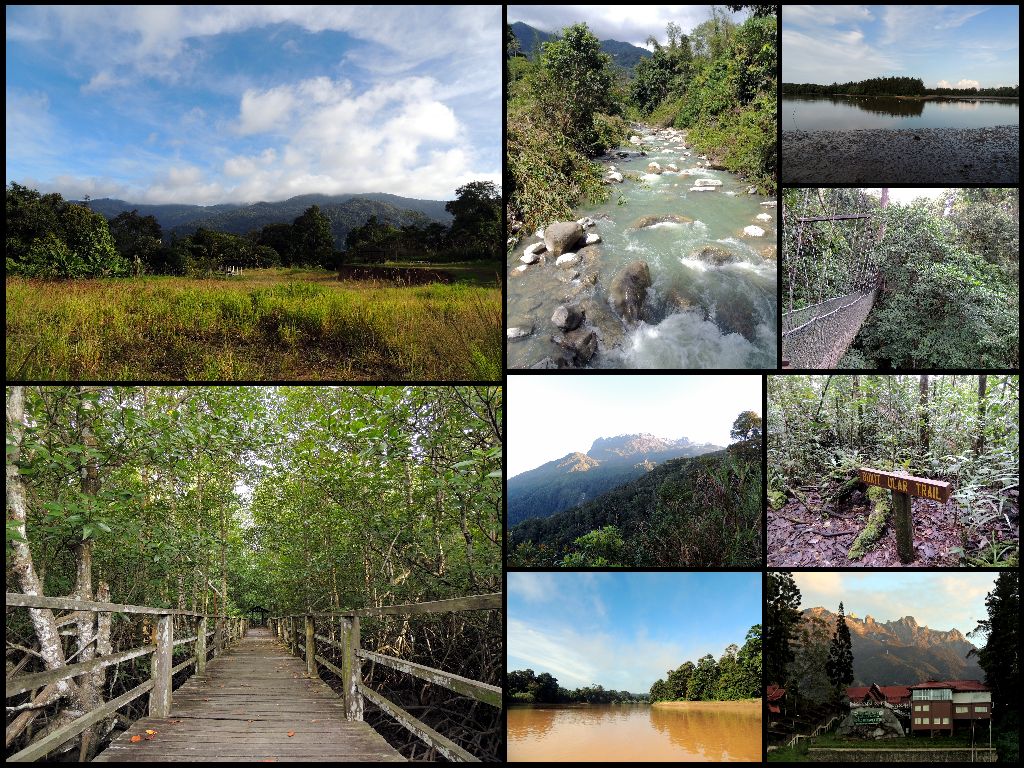
They also visited Rafflesia Nature Reserve, Mt. Kinabalu National Park, Kinabalu Wetlands Centre, Rainforest Discovery Centre at Sepilok, Gomantong Cave, and the Kinabatangan River. They were thrilled to see a tarsier, orangutans, proboscis monkeys, and flying squirrels, along with other mammals and endemic birds. Jessica was pleased to be visiting places that she had previously digitized and drawn in ArcGIS, and both enjoyed hiking and observing wildlife in the lowland Dipterocarp forests of tall Shorea and Kompassia trees.
It was encouraging to see that department personnel and local people are proud of what Sabah has to offer and that the government has stepped up to conserve the forests of Sabah.
Ryan attends forest fragmentation workshop at Imperial College London
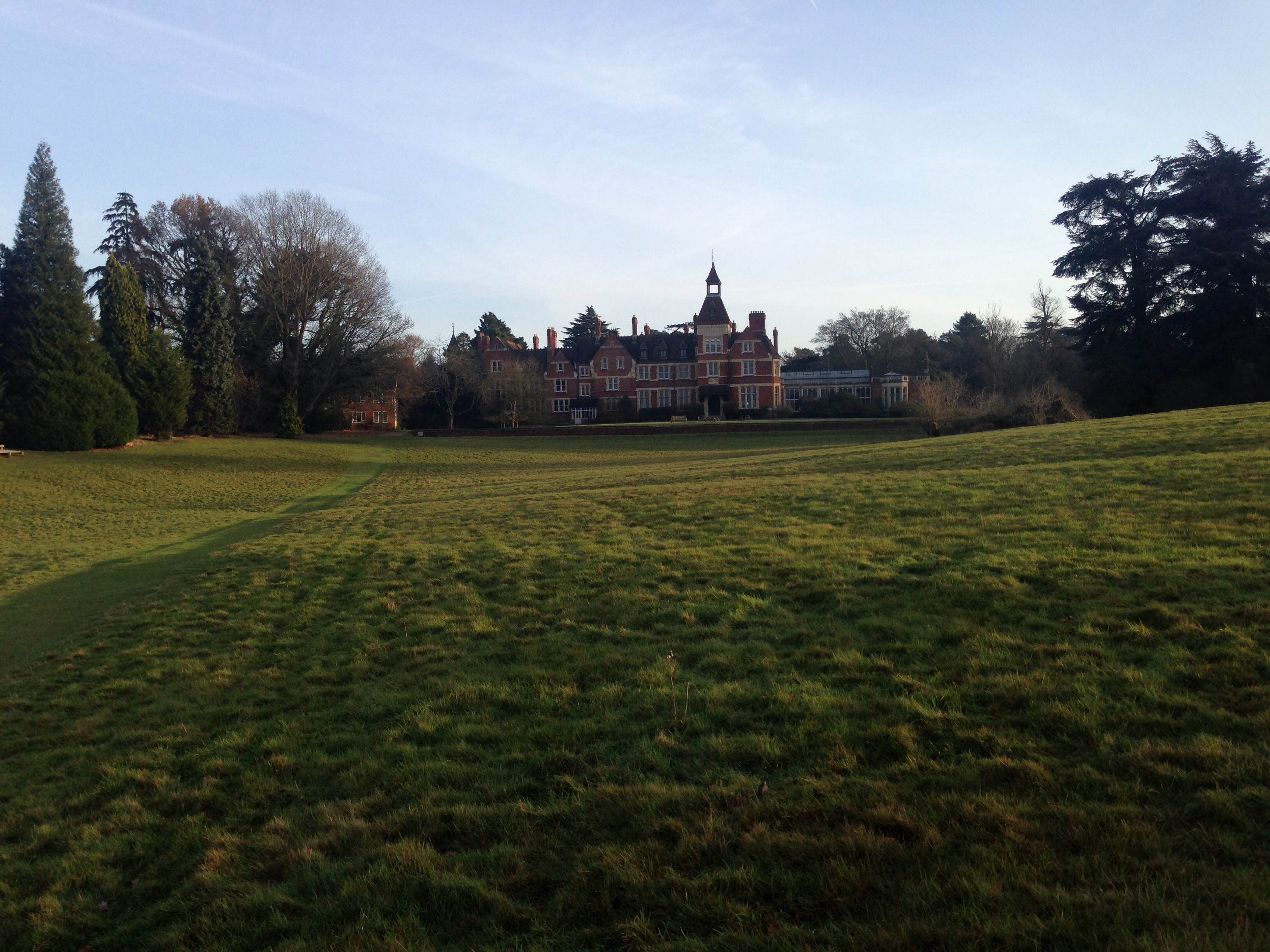
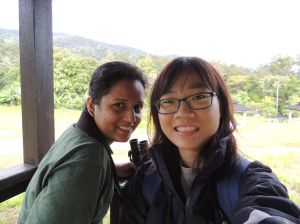
A recent workshop at the Silwood Park campus of Imperial College London brought together field biologists, experimentalists, and theoreticians to study the problem of forest fragmentation and biodiversity loss. Participants discussed a wide range of topics, from large-scale tropical deforestation experiments to mathematical models of fragmented species–area curves to experiments on microbial communities. The workshop has instigated exciting new research projects.
![]() |
![]() |
| Left to right: Bob Holt, Katharina Brinck, James Rosindell, Evan Duggan, Jack Hatfield, Thorsten Wiegand, Ryan Chisholm, Liza Comita; Photo credit: Thorsten Wiegand |
New paper in Theoretical Ecology with NIMBioS colleagues
A long-standing goal in ecology is to develop models that are simple enough to provide testable predictions but complex enough to capture some of the vagaries of nature. To this end, our new paper, led by Sharon Bewick, derives mathematical results describing the dynamics of a stochastic model with overlapping niche structure. Previous models of this kind have been restricted to non-overlapping niche structures. This paper had its genesis in workshops at the National Institute for Mathematical and Biological Synthesis, when Sharon, Erol Akçay and Will Godsoe were post-docs there in 2010 and 2011.
Lab members attend SCB meeting in Melaka
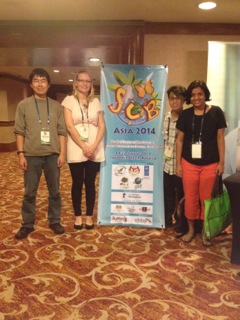
Lab members Deepthi Chimalakonda, Catharina Gallacher, Felix Lim, Nega Tassie Abate and Tak Fung attended the The 3rd Asia Regional Conference of the Society for Conservation Biology, held from 19–22 August in Melaka, Malaysia. Catharina presented her work on statistical power in animal conservation studies; Felix presented his work on species–area relationships in fragmented forest tree communities; Nega presented his work on species-distribution modelling of endemic bird species in Ethiopia under current and future climate scenarios; and Tak presented his work on quantifying trade-offs between biodiversity conservation and maintenance of productivity in forest tree communities. In addition, all lab members took the opportunity to engage with people at the forefront of conservation and their work.