Category Archives: Uncategorized

New paper on grassland dynamics published in Theoretical Ecology

Native grasslands across the world are subject to exotic weed invasion, over-fertilisation and other threatening processes. Effective restoration and management of grasslands depends on our ability to understand these processes and their interactions. In our new paper, we use mathematical models to explore how exotic invasion and fertilisation can interact to drive and maintain undesirable exotic-dominated states. Interestingly, we find a broad range of conditions under which alternate stable states are possible, implying that invasions, once they occur, can be very difficult to reverse.
Chisholm, R. A., D. N. L. Menge, T. Fung, N. S. G. Williams, and S. A. Levin. The potential for alternative stable states in nutrient-enriched invaded grasslands. Theoretical Ecology.

WBP grasslandgrasslands bistability

Jessica and Deepthi meet with wildlife and forestry officials in Sabah, Malaysia

As part of Jessica’s Honours thesis on mapping ecosystem services in Sabah, Jessica and Deepthi made a trip to meet officials from state departments including the Sabah State Water Department, Sabah Parks, Sabah Wildlife Department, and the Sabah Forestry Department. Each department has a specific role in protecting and conserving the watershed, wildlife, and forests of Sabah.

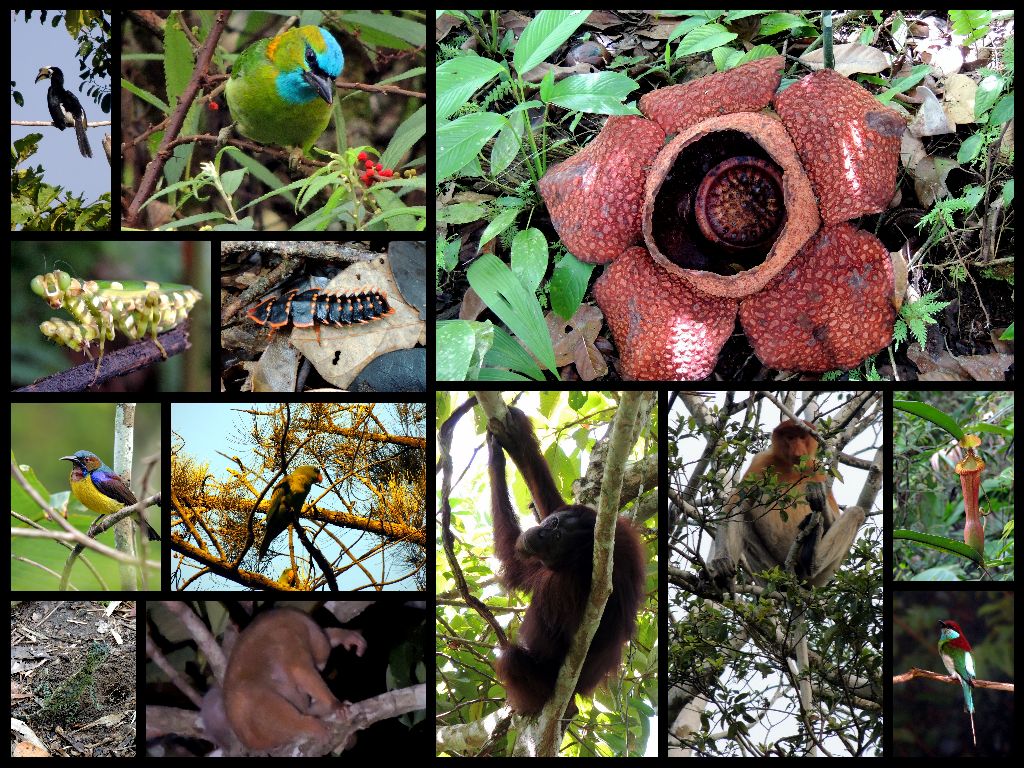
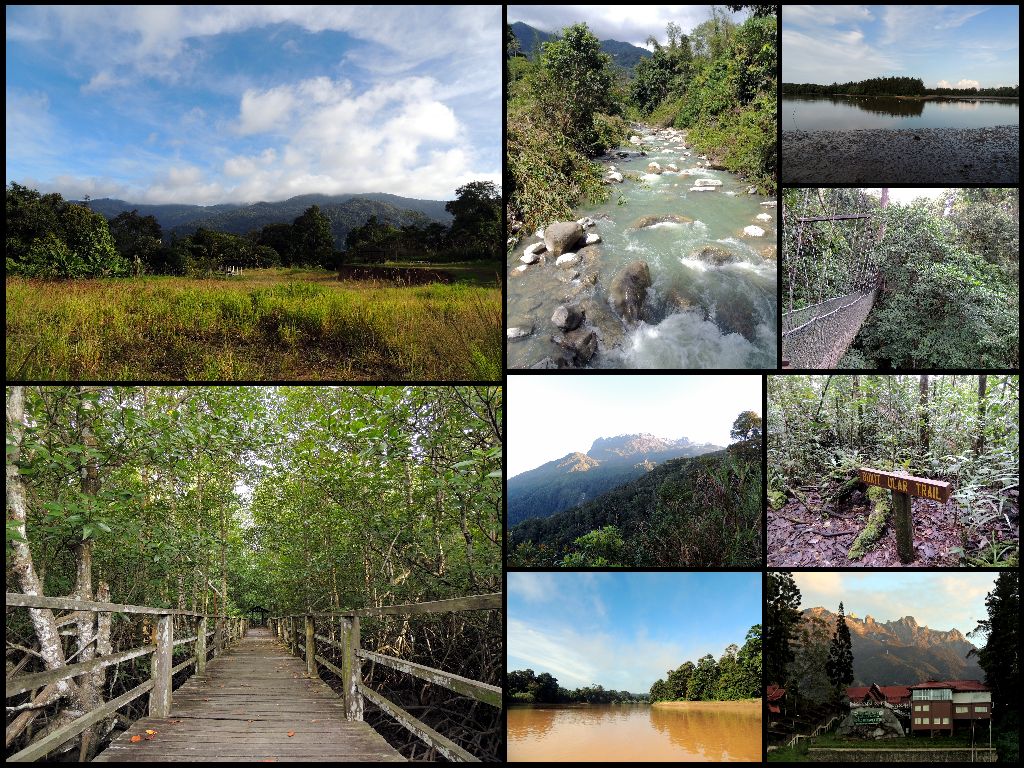
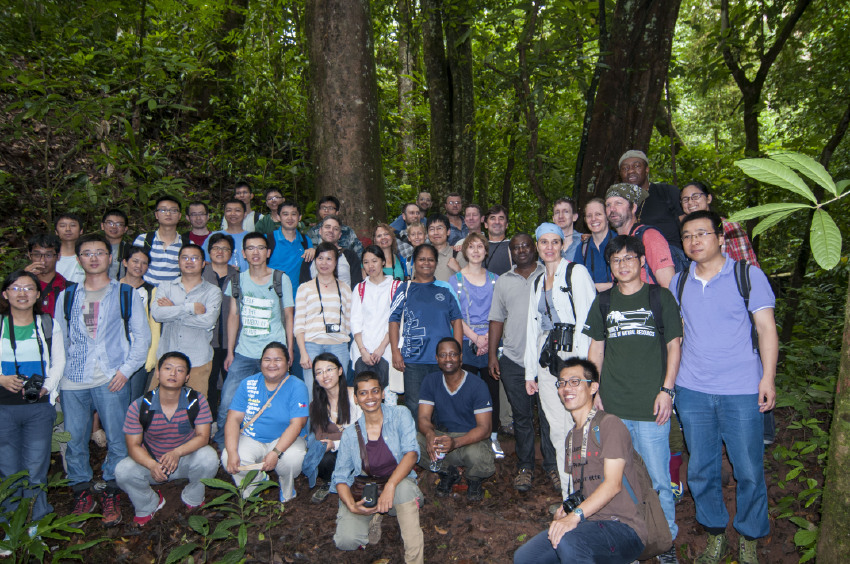
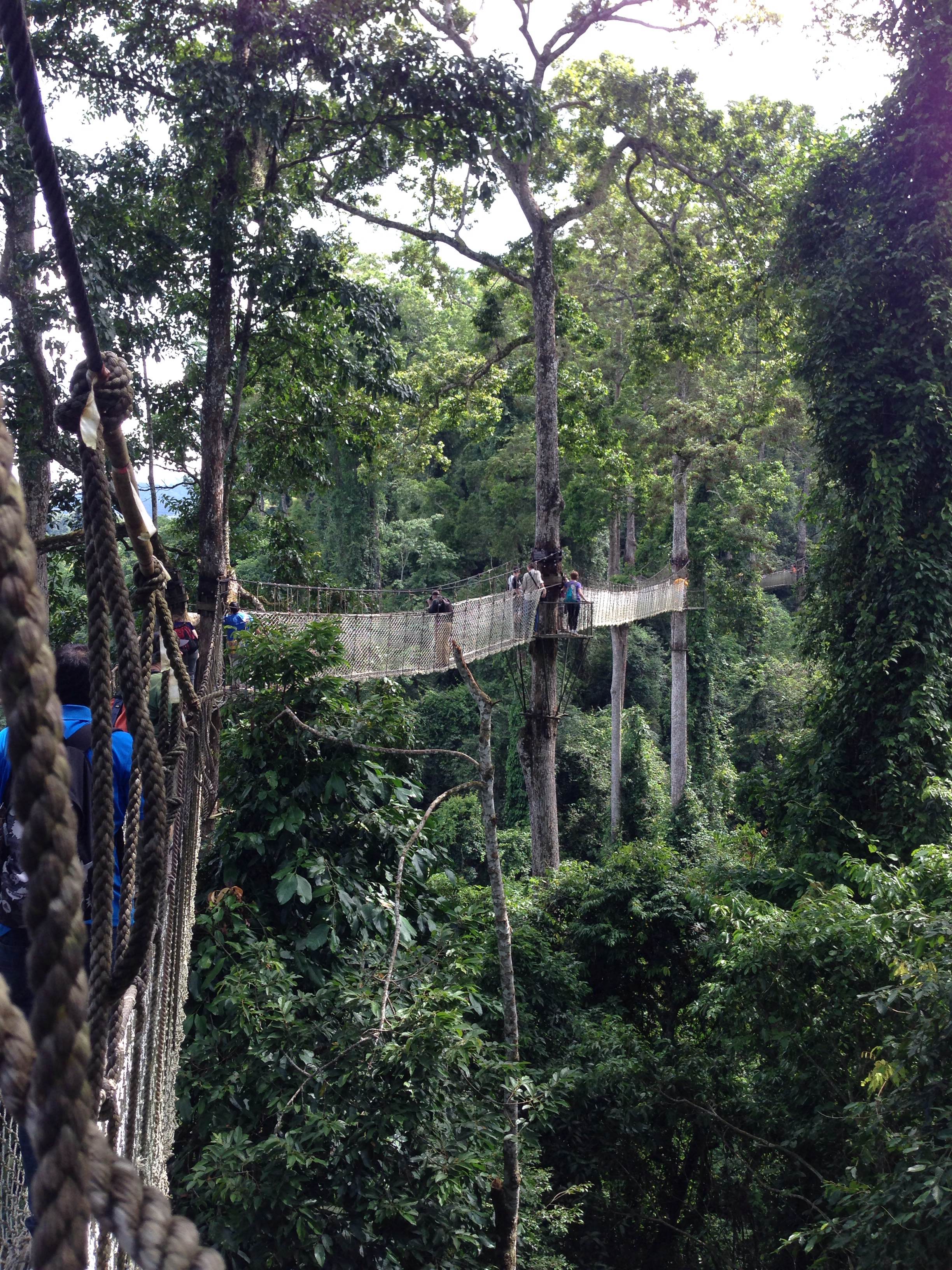
wildlife1They also visited Rafflesia Nature Reserve, Mt. Kinabalu National Park, Kinabalu Wetlands Centre, Rainforest Discovery Centre at Sepilok, Gomantong Cave, and the Kinabatangan River. They were thrilled to see a tarsier, orangutans, proboscis monkeys, and flying squirrels, along with other mammals and endemic birds. Jessica was pleased to be visiting places that she had previously digitized and drawn in ArcGIS, and both enjoyed hiking and observing wildlife in the lowland Dipterocarp forests of tall Shorea and Kompassia trees.

photos for labIt was encouraging to see that department personnel and local people are proud of what Sabah has to offer and that the government has stepped up to conserve the forests of Sabah.

DSCN0092

Ryan attends forest fragmentation workshop at Imperial College London

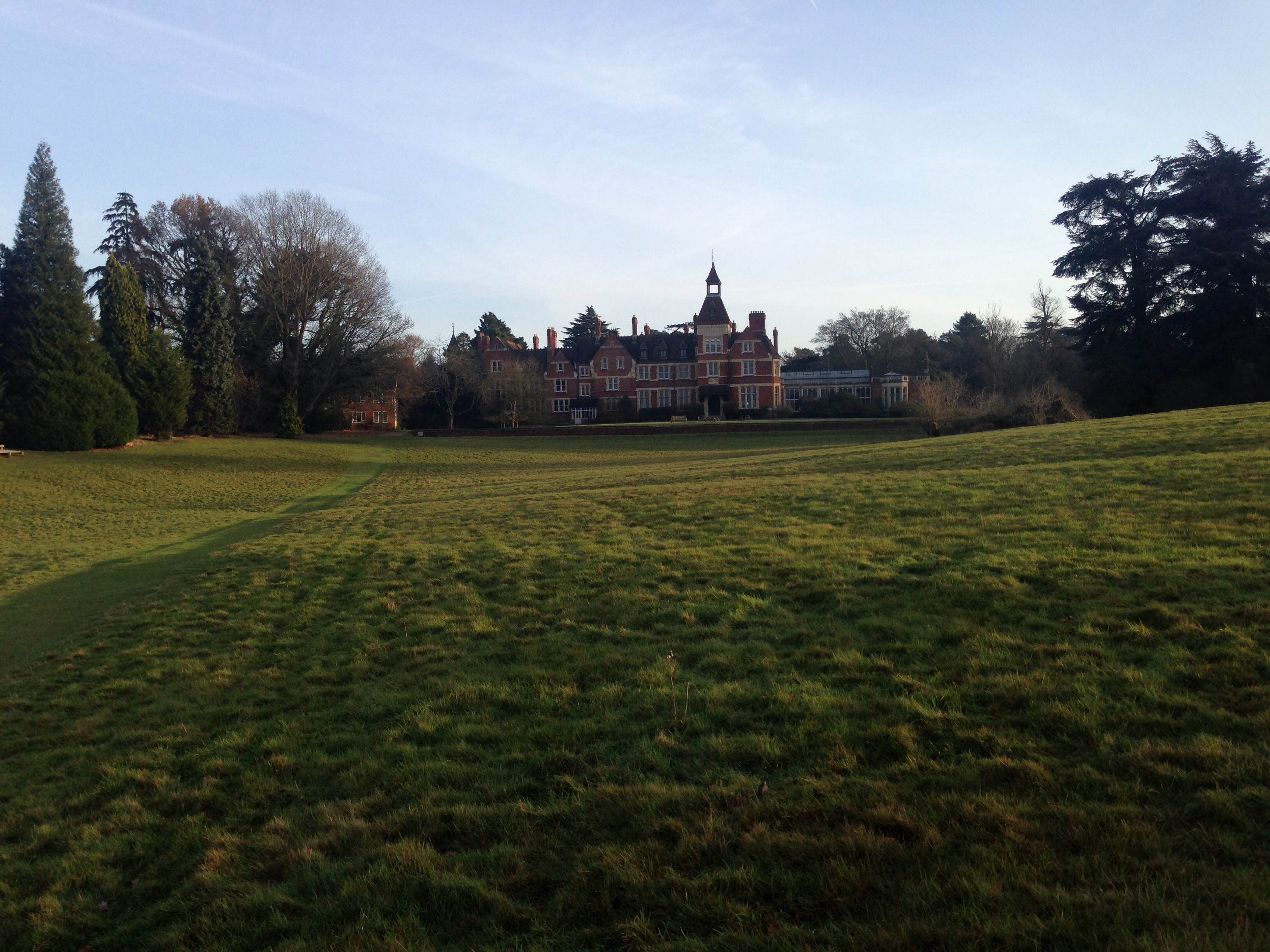
A recent workshop at the Silwood Park campus of Imperial College London brought together field biologists, experimentalists, and theoreticians to study the problem of forest fragmentation and biodiversity loss. Participants discussed a wide range of topics, from large-scale tropical deforestation experiments to mathematical models of fragmented species–area curves to experiments on microbial communities. The workshop has instigated exciting new research projects.

DSC_7747_ns IMG_2858
Left to right: Bob Holt, Katharina Brinck, James Rosindell, Evan Duggan, Jack Hatfield, Thorsten Wiegand, Ryan Chisholm, Liza Comita; Photo credit: Thorsten Wiegand

New paper in Theoretical Ecology with NIMBioS colleagues

A long-standing goal in ecology is to develop models that are simple enough to provide testable predictions but complex enough to capture some of the vagaries of nature. To this end, our new paper, led by Sharon Bewick, derives mathematical results describing the dynamics of a stochastic model with overlapping niche structure. Previous models of this kind have been restricted to non-overlapping niche structures. This paper had its genesis in workshops at the National Institute for Mathematical and Biological Synthesis, when Sharon, Erol Akçay and Will Godsoe were post-docs there in 2010 and 2011.

Bewick, S., R. A. Chisholm, E. Akçay & W. Godsoe (2014) A stochastic biodiversity model with overlapping niche structure, in press. Theoretical Ecology.

Smoky Mountains

Lab members attend SCB meeting in Melaka

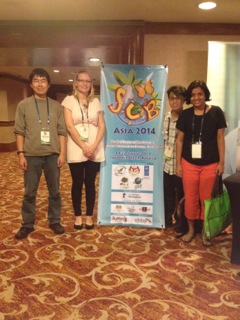
Lab members Deepthi Chimalakonda, Catharina Gallacher, Felix Lim, Nega Tassie Abate and Tak Fung attended the The 3rd Asia Regional Conference of the Society for Conservation Biology, held from 19–22 August in Melaka, Malaysia. Catharina presented her work on statistical power in animal conservation studies; Felix presented his work on species–area relationships in fragmented forest tree communities; Nega presented his work on species-distribution modelling of endemic bird species in Ethiopia under current and future climate scenarios; and Tak presented his work on quantifying trade-offs between biodiversity conservation and maintenance of productivity in forest tree communities. In addition, all lab members took the opportunity to engage with people at the forefront of conservation and their work.

IMG_1470

Lab attends Association of Tropical Biology and Conservation meeting in Cairns

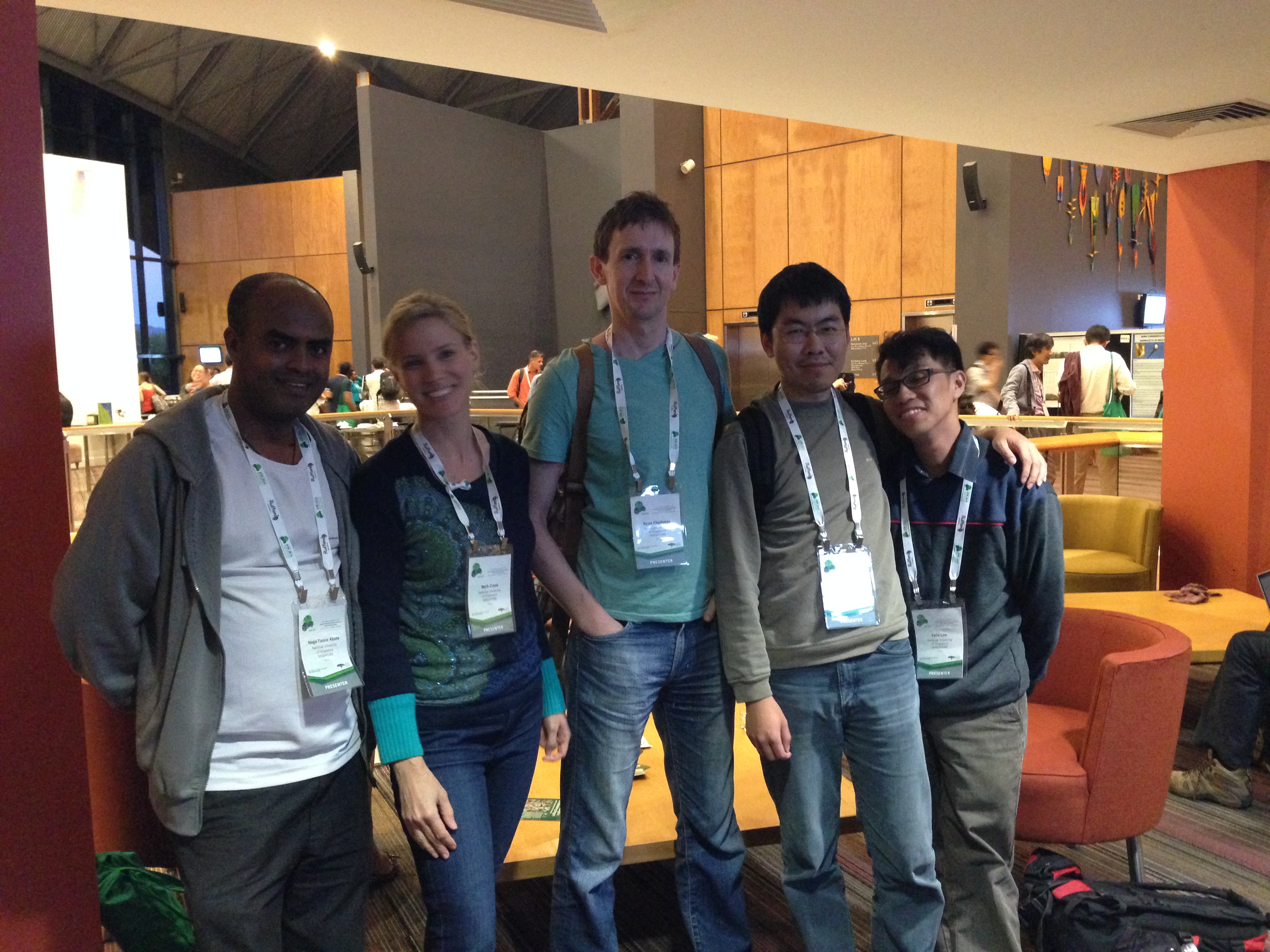
Members of the lab attended last week’s annual meeting of the Association of Tropical Biology and Conservation in Cairns, Australia. Ryan presented his work on dispersal and the maintenance of diversity, Tak presented his work on the effects of environmental variance on community structure, Beth presented her work on spatial autocorrelation and species distribution models, Nega presented his work on the projected effects of climate change on Ethiopian bird distributions, and Felix presented his work on habitat fragmentation and species–area curves.

IMG_2461

New paper with James O’Dwyer on Red Queen model dynamics in Ecology Letters

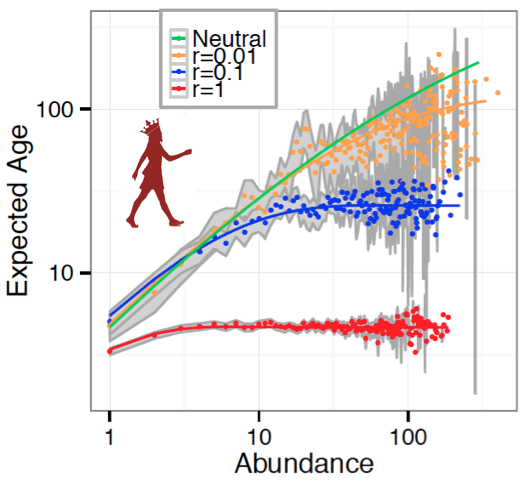
Neutral models can provide reasonable descriptions of static biodiversity patterns, but they severely overestimate species’ geological ages. This suggests that in nature there may be “Red Queen” mechanisms that accelerate both the extinction of old species and the ascension of new species. But can Red Queen models make static predictions that are as good as those of neutral theory? We showed mathematically that a Red Queen model can indeed generate more realistic species ages while simultaneously predicting a species abundance distribution that is not radically different to the log-series predicted by the neutral model. This establishes the general plausibility of Red Queen dynamics as a mechanism structuring biodiversity in nature.

O’Dwyer, J. P. & R. A. Chisholm (2014) A mean field model for competition: From neutral ecology to the Red Queen, in press, Ecology Letters.

Image

Four undergraduates join the lab for summer internships

Image
Left to right: Laura Villain, Yang Jia Qi, Aden Ip Yin Cheong, Soh Yong Sheng

Summer internships in our lab give undergraduate students the opportunity to learn skills and techniques used in theoretical ecology and to collaborate on exciting research projects. This summer we have four interns:

  • Jia Qi is majoring in biological sciences at NUS. For her internship, she is working with Aden to investigate the relationship of invasive species richness to native species richness and economic development for countries around the world.
  • Aden is also majoring in biological sciences at NUS. He is working with Jia Qi on the invasive species project.
  • Laura is an exchange student from INSA Lyon in France, where she is studying bioinformatics and mathematics. For her internship, she is developing mathematical models to estimate species dominance in ecological communities.
  • Yong Sheng is majoring in physics and minoring in computer science at NUS. For his internship, he is analysing mathematical models of the relationship between biodiversity and ecosystem function in forests.

New CTFS paper on temporal variability of forest tree communities published in Ecology Letters

Forests contain a large fraction of the Earth’s biodiversity. But to what extent does the species composition of forests change over time, and to what extent is it stable? To address this question, we analysed data from 12 long-term Center for Tropical Forest Science plots around the world. Together, these plots contain over 2 million individual trees and over 4000 tree species and have been monitored for periods of 6 to 28 years. We found that forest communities are far from stable over time: the data are consistent with the hypothesis that environmental variables, such as climate, are causing strong fluctuations in tree species abundances at all 12 of our sites over time. This poses challenges to existing theories of biodiversity, which are based largely on notions of stability and demographic variance, and points the way to new theories that will give a more adequate explanation of forest dynamics.

The paper can be accessed here.

Imagelambir_palm