Category Archives: Uncategorized

Catharina receives a grant from the Mohamed bin Zayed Species Conservation Fund

Catharina has received a grant from the Mohamed bin Zayed Species Conservation Fund. The grant was awarded to support her work on the Luidan stream toad (Ansonia platysoma) in Kinabalu Park in Sabah (Malaysian Borneo). The Luidan stream toad is listed as endangered by the IUCN and there is limited information available on its habitat requirements. Catharina will be deploying iButtons to monitor temperature and humidity in sites where the species lives as well as in areas where it is not known to occur. She will also record general habitat characteristics to obtain a clearer picture as to why this species’ distribution is so restricted.


Editorial on Indonesia’s forest fires online at Conservation Biology

Our editorial about Indonesia’s disastrous 2015 forest fires is now online at Conservation Biology. We discuss the causes and impacts of the fires, with a focus on regional haze and global climate change. We argue that Indonesia’s forest fires are unlikely to be mitigated by national or regional action alone and that the best hope for long-term solutions lies in REDD+ and other international efforts to combat climate change.

Chisholm, R.A., Wijedasa, L. & Swinfield, T. (in press). The need for long-term remedies for Indonesia’s forest fires. Conservation Biology


Tak coauthors new paper on allometric equations in Forest Ecology and Management

The estimation of tree community biomass is important for the development and implementation of policies and programs designed to mitigate the effects of global climate change, such as the UN’s REDD+. However, there has been a lack of knowledge on the availability and appropriateness of allometric equations for estimating tree biomass in SE Asia.

A collaborative effort between Jiaqi Yuen and Alan Ziegler (Department of Geography at NUS) and Tak Fung addressed the key knowledge gap identified in a review of allometric equations for 12 major land covers in SE Asia, recently published in Forest Ecology and Management. The review provides a comprehensive overview of the equations available for 13 countries in SE Asia and discusses in detail the uncertainties associated with their use.

Yuen, J.Q., Fung, T. & Ziegler, A.D. (2016). Review of allometric equations for major land covers in SE Asia: Uncertainty and implications for above- and below-ground carbon estimates. Forest Ecology and Management, 360, 323-340.

Peat_swamp_forest_Kalimantan
Peat swamp forest in Kalimantan (source: Wikimedia Commons)

Workshop on automated forest restoration in Chiang Mai, Thailand

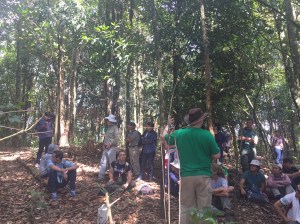
Ryan attended a workshop on automated forest restoration organised by the Forest Restoration Unit of Chiang Mai University, Thailand. Participants discussed current and future technologies for automated forest restoration, including unmanned aerial vehicles (UAVs), LiDAR, and algorithms for plant species recognition. A field trip gave participants the opportunity to see UAVs delivering seeds to a target, harvesting seeds from trees, and watering vegetation.

IMG_4497 IMG_4521

Deepthi attends migratory bird workshop at the Smithsonian in Virginia

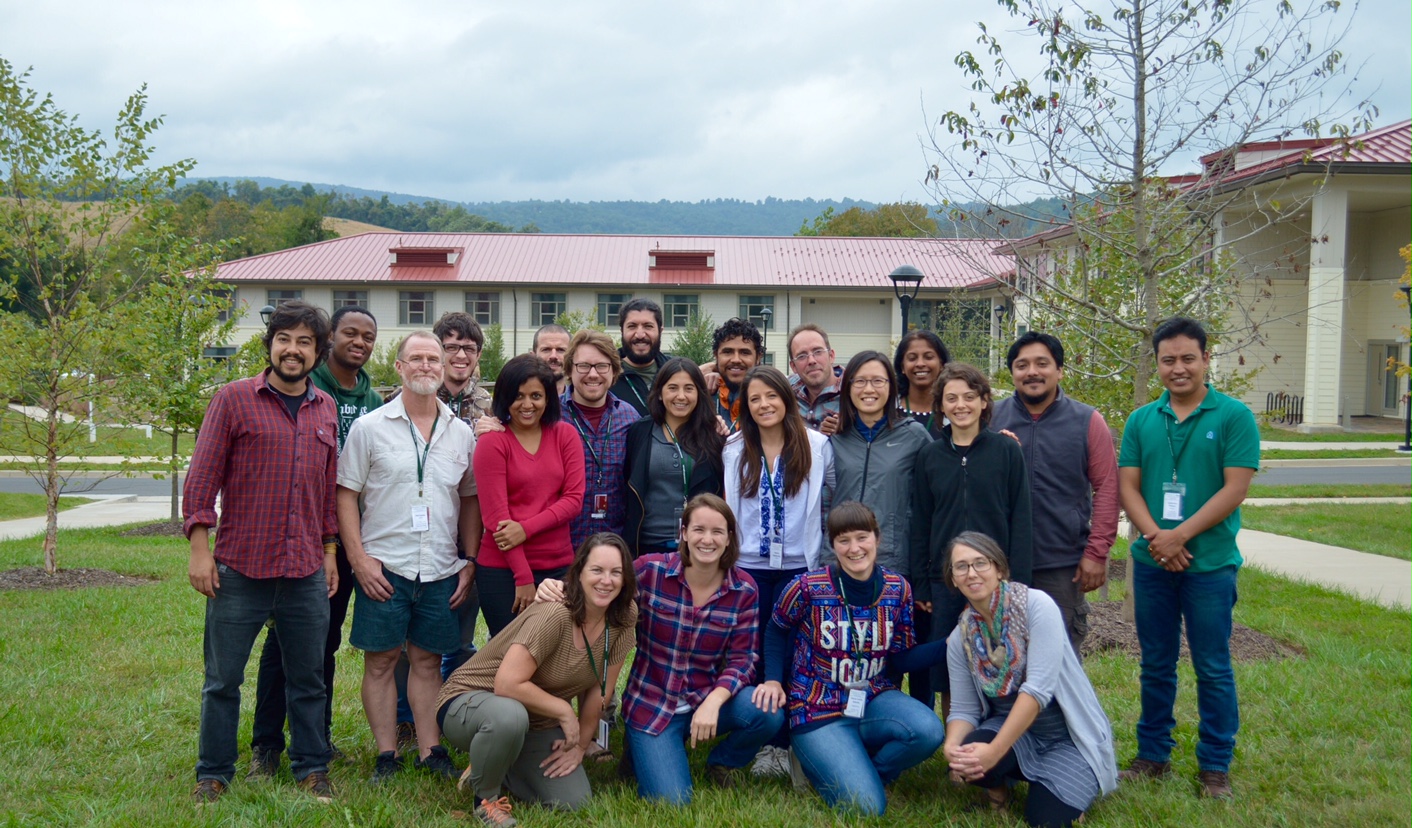
Deepthi attended a two-week workshop on the ecology and conservation of migratory birds at the Smithsonian Mason School of Conservation (SMSC) in Front Royal, Virginia. The course included foundational and special topic lectures by faculty from the Smithsonian Migratory Bird Center and SMSC, data analyses in R, daily field sessions, paper readings, discussions and laboratory work. Lectures focused broadly on animal migration, breeding and non-breeding biology, moult and seasonal interactions. Special topic lectures included stable isotopes and migration tracking technology. The workshop also emphasised R sessions where participants learnt to analyse data from various avian sampling techniques such as distance sampling, mark capture-recapture, behaviour and tracking, radar ornithology and spatial analyses.

There were 18 participants from 12 countries. Deepthi was supported by a full scholarship from the ConocoPhillips Water and the Biodiversity Stewardship Certificate Programme.

FullSizeRender    IMG_7394

New paper on dominance in ecological communities in Journal of Theoretical Biology

Biodiversity loss is of major concern to human societies and is a complex scientific problem. Many studies have concentrated on the dynamics of species richness (number of species), but fewer have explored the dynamics of species evenness, which takes into account the numerical dominance of different species. This is despite the fact that evenness and dominance relate more directly to ecosystem function and are more sensitive to human impacts.

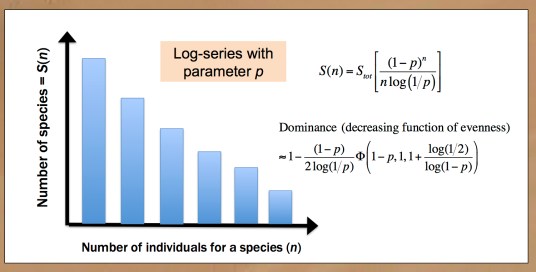
We have just published a study in the Journal of Theoretical Biology in which we develop new mathematical formulae that succinctly describe the dominance and evenness of ecological communities for typical species-abundance distributions (SADs). We use the formulae to (i) infer that dominance is expected to be typically high in natural communities, (ii) show how a lower bound of dominance can be estimated for the Amazonian tree community, and (iii) predict that dominance increases with increased environmental variance, which could arise in future, for example, due to human impacts.

Analytical formulae for computing dominance from species-abundance distributions
Tak Fung, Laura Villain, Ryan A. Chisholm
http://www.sciencedirect.com/science/article/pii/S0022519315004543

dominance

Catharina attends International Congress for Conservation Biology in Montpellier

Catharina attended the joint International Congress for Conservation Biology (held jointly with the European Congress for Conservation Biology) in Montpellier, France, in August. She presented a talk titled “Training region effects on Species Distribution Model predictions: the effect of genus and life history traits”. Over 2000 people attended the congress. Her attendance at the congress was supported by a travel award from the organisers.

SAMSUNG CAMERA PICTURES

Catharina with Mark Burgman

Tak attends the Ecological Society of America’s 100th annual meeting in Baltimore

Tak attended the 100th Ecological Society of America (ESA) meeting in Baltimore, Maryland over 9th–14th August 2015. The conference was attended by over four thousand people. Tak presented his talk “Analyzing global tree and climate datasets to quantify the response of forest biodiversity to environmental change” in a session organised by the Center for Tropical Forest Science (CTFS), which consisted of a total of ten talks. The talk was about using tree census data from 21 CTFS plots worldwide to examine the relationship between tree species richness and environmental variability.

Baltimore