
Last week, Ryan visited the School of BioSciences at the University of Melbourne and the School of Biological Sciences at Monash University. He delivered seminars about the lab’s recent work on the mechanisms maintaining diversity in ecological communities and on Singapore’s history of biodiversity loss.
Category Archives: Uncategorized
Wang Shaopeng visits the lab
Last week Professor Wang Shaopeng, from Peking University, visited us to meet with staff and students and to deliver a departmental seminar. Shaopeng is a theoretical ecologist who studies the relationship between biodiversity, ecosystem function and ecosystem stability. In his seminar, Shaopeng discussed, among other topics, his recent work on spatial scaling laws for biodiversity and ecosystem stability.
Lab receives new grants
Our lab recently received a grant from Singapore’s Ministry of Education to build a new framework for biodiversity accounting. The global biodiversity crisis has spurred efforts to quantify the relative biodiversity value of patches of land under different scenarios. Biodiversity accounting can support biodiversity impact assessment, biodiversity footprint estimation, and biodiversity credit market development. The World Economic Forum projects that annual demand for biodiversity credits could reach US$2 billion by 2030 and US$69 billion by 2050. Unfortunately, current frameworks for biodiversity accounting are mostly ad hoc and lead to misleading valuations in some cases. The biodiversity accounting framework we will develop under this new grant will be based on fundamental ecological and economic principles and will ultimately support more scientifically sound allocation of economic resources to protect natural capital.
Ryan is also a Partner Investigator on a recent Australian Research Council grant led by Lynette Loke of the University of Melbourne. The grant aims to scale up their previously successful approach to understanding ecological community diversity using a combined theoretical and experimental approach applied to intertidal systems.
Sankar’s paper on squamate extirpations and recoveries in Singapore published in Biological Conservation
Singapore has experienced substantial habitat and biodiversity loss since 1819. Nevertheless, the last century has also seen some forest recovery, as well as the natural re-establishment of several previously extirpated species like oriental pied hornbills and smooth-coated otters. Animals that can fly and swim can re-establish from source populations in Malaysia, but snakes and lizards—also known as squamates—are not able to recolonise as easily. How can we use mathematical models to think about which species to reintroduce to recovering forests? In 2023, we published a paper applying the novel MODGEE (matrix-of-detections-gives-extinction-estimates) model to detailed historical bird, butterfly and plant datasets from Singapore to study extirpation rates for these groups. In a new study, led by Sankar and just published in Biological Conservation, we applied this model to squamates in Singapore.
We compiled a detailed historical dataset for squamates in Singapore (largely based on records from Figueroa et al., 2023) and used the MODGEE model first to generate an extirpation timeline. Our estimated extirpation rate for squamates was 17%, which was lower than previously estimated rates for birds (40%) and butterflies (46%). This implies that squamates may be more resilient to habitat degradation than birds, perhaps because birds generally have lower population densities, and butterflies, perhaps because of butterflies’ reliance on host plants.
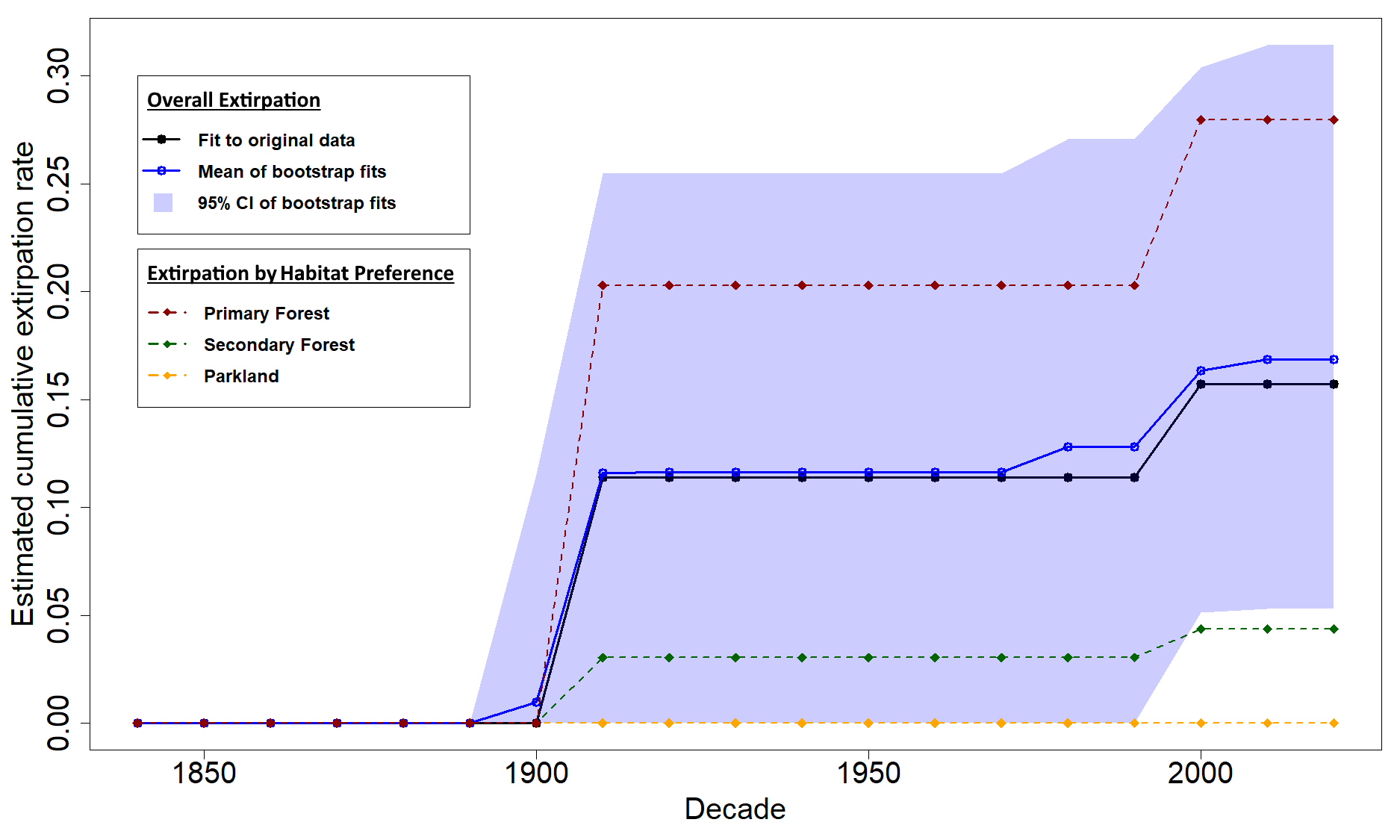
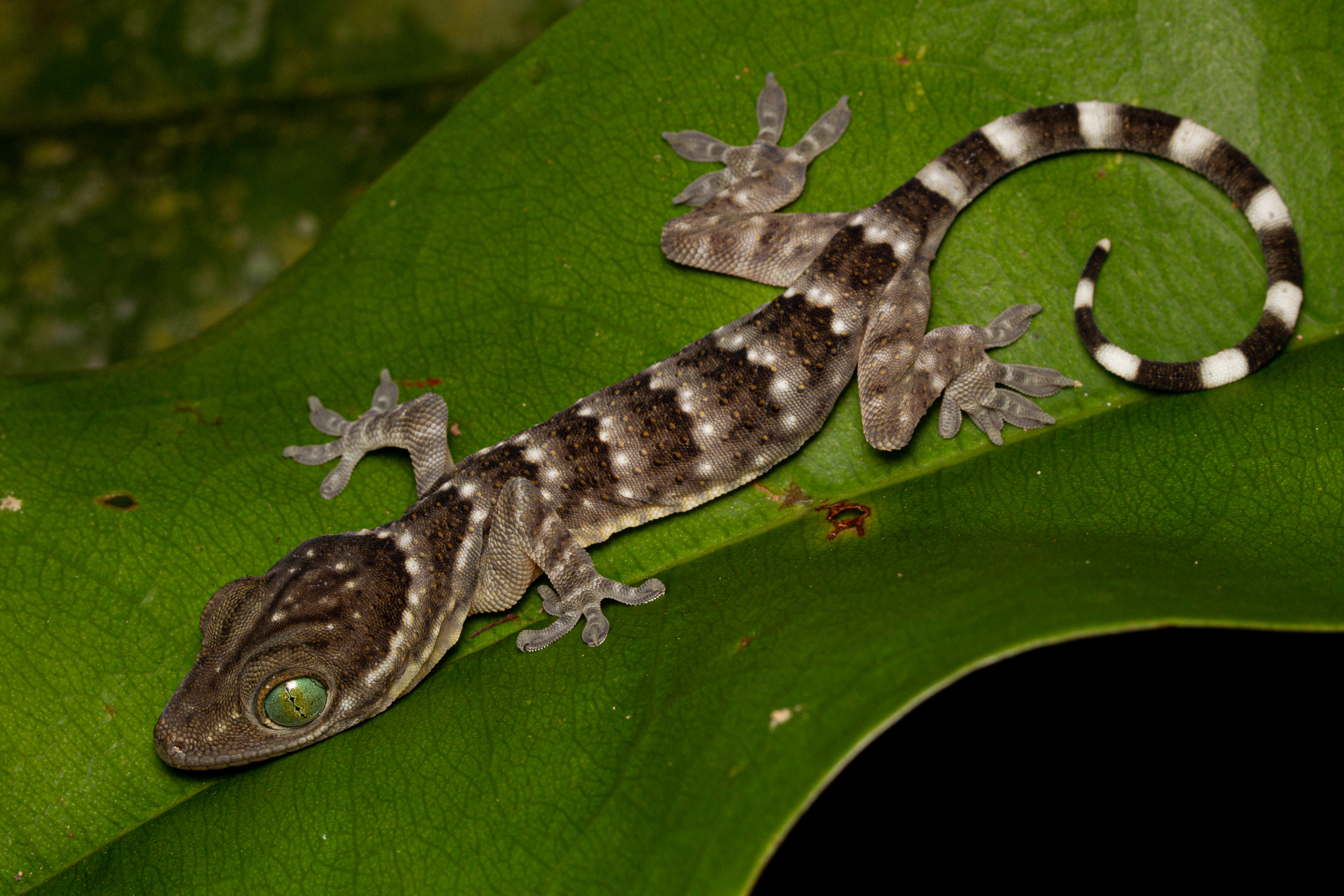
We also used the results to inform a conservation translocation triage for extirpated squamates in Singapore. Given that squamates were never systematically hunted at scale (no pun intended) in Singapore, their extirpation timeline can serve as an indicator of each species’ sensitivity to habitat loss. Since highly sensitive species would have been lost early on in Singapore’s developmental history, recently extirpated species would likely be better candidates for reintroduction to Singapore’s recovering forests. Through this method, we identified the hulk forest gecko (Gekko hulk) as a fitting potential candidate species for reintroduction to Singapore from stock populations in Peninsular Malaysia.
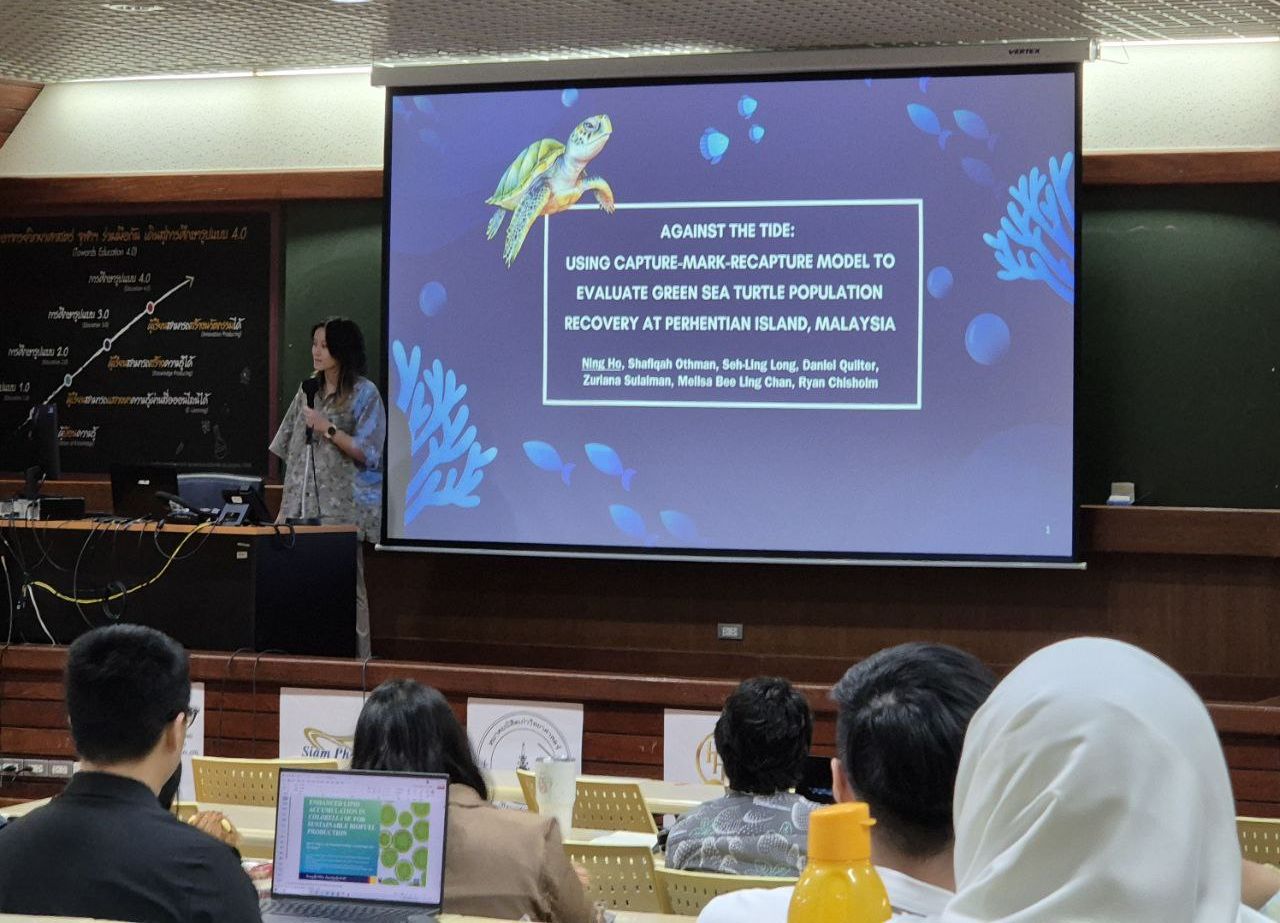
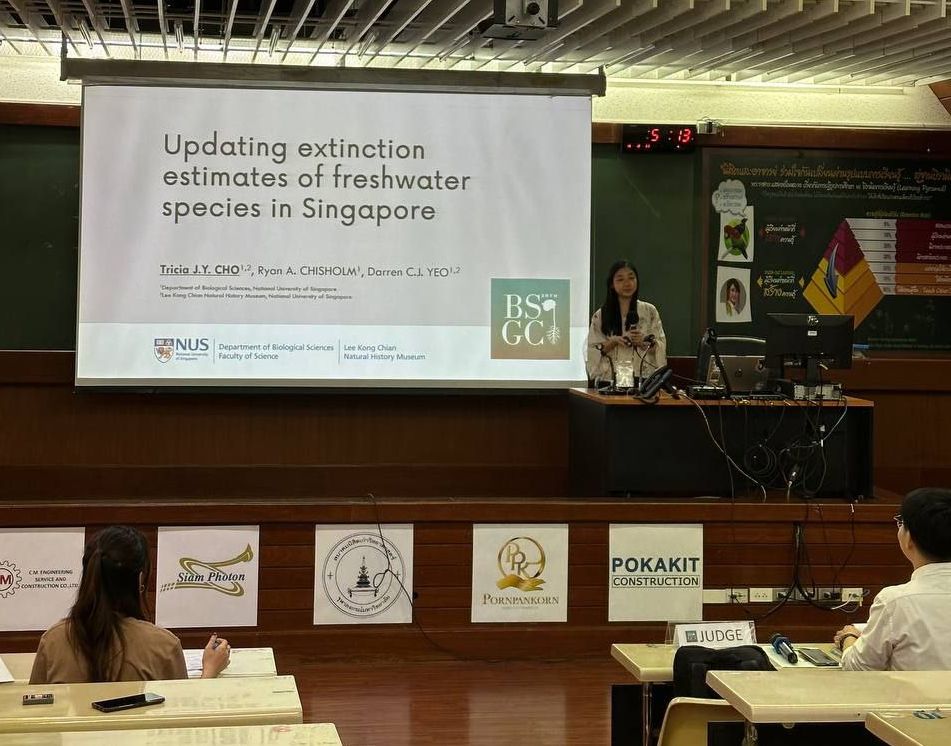
Ho Ning and Tricia attend Biological Sciences Graduate Congress in Chulalongkorn University, Thailand
The Biological Sciences Graduate Congress is an annual event bringing together Master’s and PhD students from NUS; University of Malaya, Malaysia; and Chulalongkorn University, Thailand. Ho Ning and Tricia recently attended the 2025 congress at Chulalongkorn University. Ho Ning presented her work on modelling sea turtle population dynamics in Southeast Asia. Tricia presented her work on estimating dark extinctions for freshwater taxa in Singapore.
Tak attends the International Society for Ecological Modelling Global Conference in Kashiwa, Japan
Tak attended The International Society for Ecological Modelling (ISEM) Global Conference, held over 19–23 October in Kashiwa, near Tokyo. This conference is a congregation of researchers who apply mathematical and statistical models to ecological problems, thus providing insights for effective natural resource management and conservation. At the conference, Tak presented a talk on modelling the effects of fragmentation on extinction risk of populations, which is a collaboration with Ryan and Nao Takashina from the University of Tokyo. Tak attended other talks and poster presentations related to ecological modelling, and networked with numerous other researchers.
After the conference, Tak spent ten days visiting Nao and colleagues at the Department of International Studies at the University of Tokyo’s Kashiwa campus. Nao constructs and uses mathematical models to explore ways of balancing human extraction and conservation in socioecological systems, such as fished marine ecosystems. Nao has previously collaborated with Chisholm Lab on the effects of environmental variability on tropical tree biodiversity. During his visit, Tak worked with Nao on our fragmentation–extinction project as well as a project on how the effectiveness of protected areas changes with spatial grain.

Ryan attends OceanX summit
Last week Ryan attended the OceanX summit in Singapore. OceanX is a nonprofit organisation dedicated to marine research and conservation. The summit was held aboard the organisation’s research vessel, the OceanXplorer. The summit brought together scientists, creative professionals, and philanthropists to brainstorm new ways to further ocean science and communicate it to the public.

Ryan attends the Ecological Society of America annual meeting in Baltimore
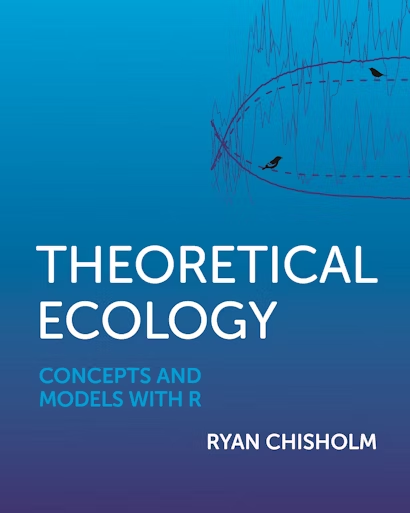
Ryan has just returned from the Ecological Society of America’s 110th annual meeting in Baltimore, Maryland, USA. In addition to partaking of the stimulating smorgasbord of seminars, Ryan attended the awards ceremony to receive the George Mercer Award on behalf of himself and Lynette Loke, and he launched his new textbook. The textbook is titled Theoretical Ecology: Concepts and Models with R and is available from Princeton University Press in paperback and hardback.
Ryan gives seminars in Beijing
Last week Ryan visited colleagues in Beijing and gave seminars at Beijing Forestry University, Peking University, and the Institute of Botany at the Chinese Academy of Sciences. At Peking University, he was hosted by Wang Shaopeng. At the Chinese Academy of Sciences, he was hosted by Chen Lei and Mi Xiangcheng and was given a tour of the new Plant Science Data Center.

Tak’s new paper on testing model predictions of higher-order species diversity on islands published in Ecology Letters
The ability of a scientific model to make accurate predictions is an important criterion for assessing its validity, but in ecology there are relatively few studies that have made and tested true a priori predictions, i.e., predictions of unseen data. In a study led by Tak and just published in Ecology Letters, we tested several ecological models’ predictions of unseen higher-order diversity patterns in island archipelago data.
Specifically, we (i) fitted a suite of mechanistic models to observed values of alpha diversity (i.e., number of species on each island) for each of 17 archipelagos, (ii) used the fitted models to make quantitative predictions of three higher-order patterns of island biodiversity, and (iii) quantitatively tested the predictions. The 17 datasets represented a wide range of taxa (including plants, birds and mammals) and archipelago types (including marine and inland water) (Fig. 1). Importantly, the predicted patterns of biodiversity represent higher orders of diversity that contain information absent in alpha diversity, namely the number of species shared between each pair of islands, the number of species shared among each triplet of islands, and the occupancy–frequency distribution that shows the frequency distribution of the number of islands occupied by species in an archipelago.
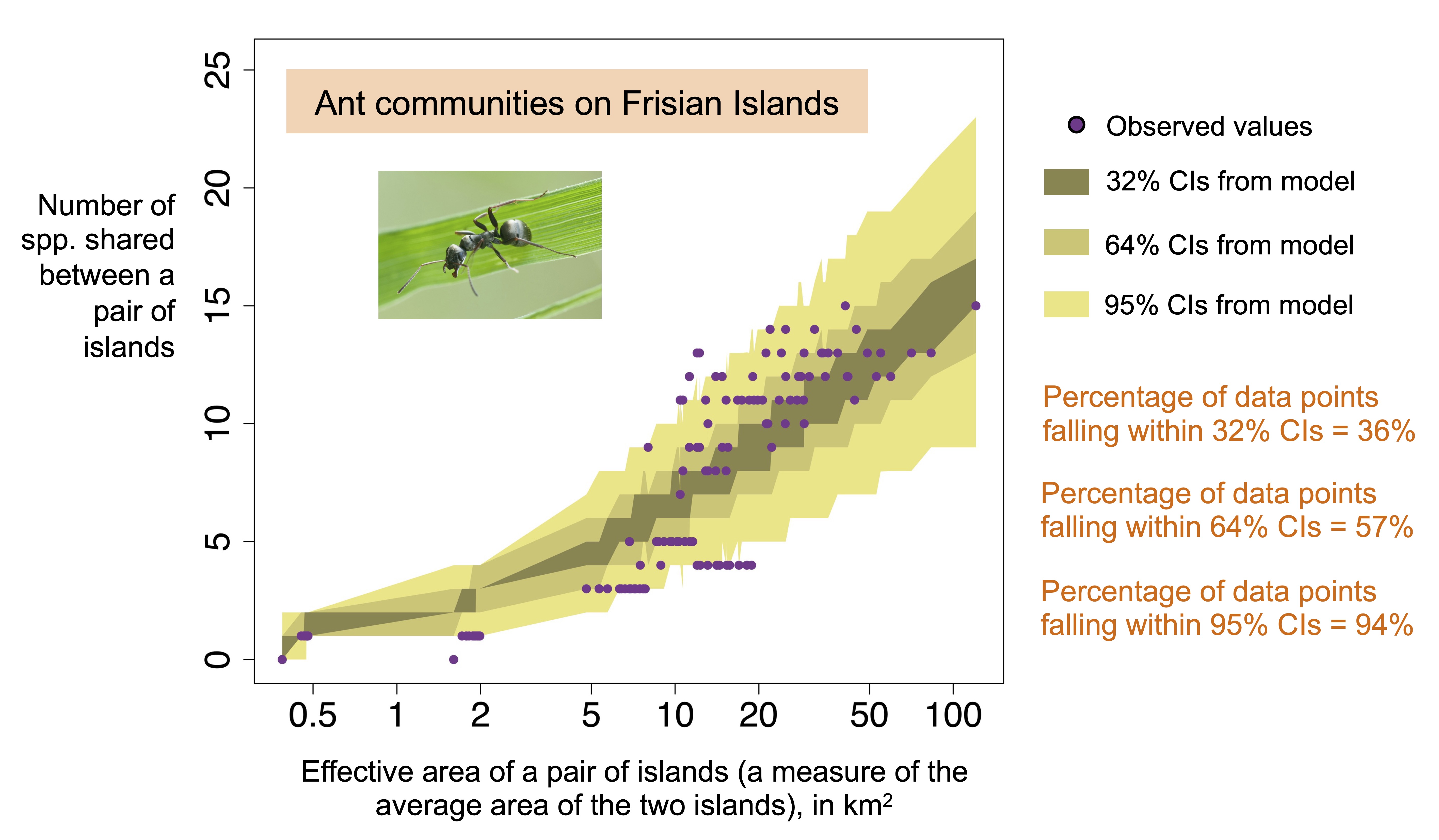
Our central finding is that an individual-based neutral model of island community dynamics produced fairly good predictions of island biodiversity (e.g., Fig. 2). This suggests that stochastic neutral competition among species together with dispersal limitation is a parsimonious explanation for multiple patterns of island biodiversity. A non-neutral version of the model that included coarse niche structure had worse predictive ability, probably due to overfitting. Our study is a clarion call for further efforts to test true predictions in ecology, in particular using mechanistic models to shed light on the processes structuring ecological systems in nature.

 Chisholm Lab
.jpg)
.jpg)