Category Archives: Uncategorized

Tak attends Models in Population Dynamics and Ecology conference in Marseille

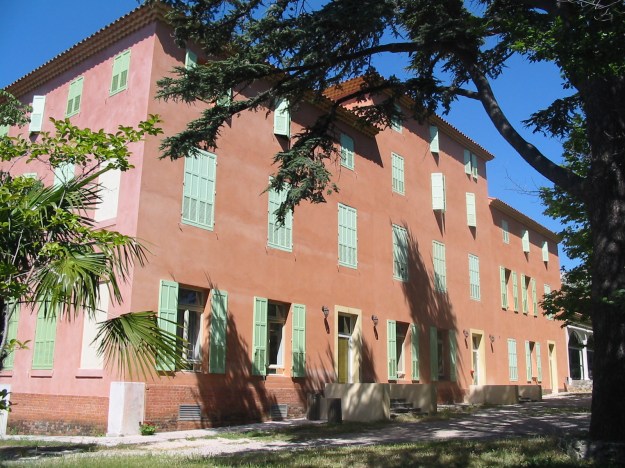
Tak has just returned from the Models in Population Dynamics and Ecology (MPDE) conference in Marseille, which was held over 5th-9th September at the Centre International de Rencontres Mathématiques (CIRM) at Aix-Marseille University. During the conference, Tak presented two new Markov Chain models describing how species abundances fluctuate under environmental variation. The models are novel in that they can be analysed to derive exact expressions for species richness and community abundance, allowing investigation of how these quantities change with increasing environmental variation, for example due to global climate change. Determining changes in richness and abundance is important because they are fundamental drivers of ecosystem functioning. In addition to presenting this work, Tak also took the opportunity to learn more about some of the latest developments in theoretical population biology and ecology, and connect with other researchers in this area.

cirm.jpg

Catharina attends World Herpetology Congress in China

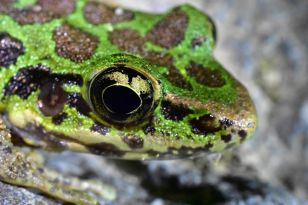
Catharina attended the World Herpetology Congress in China, where she presented a talk titled “Ansonia platysoma, the effect of habitat variables on occupancy”. She was able to attend the congress as she was awarded a partial scholarship by the congress that covered the registration fee, food and accommodation. She was also elected as a student member onto the congress committee.

frog.jpg    snake.jpg

Lab receives major grant from McDonnell Foundation

The lab has received a major research grant from the James S. McDonnell Foundation. The McDonnell Foundation was established in 1950 by aerospace pioneer James S. McDonnell and seeks to “improve the quality of life”. The US-based foundation supports complex systems research and will fund our work on complex ecological systems for the next five years.

Screen Shot 2016-07-21 at 9.38.57 AM

James. S McDonnell

Center for Tropical Forest Science workshop in Hainan

Tak and Ryan recently attended a Center for Tropical Forest Science – Forest Global Earth Observatory (CTFS-ForestGEO) workshop at Jianfengling Nature Reserve in Hainan, China. CTFS-ForestGeo maintains a network of over 60 permanent forest plots around the world containing over 6 million individual trees. The picturesque surroundings at Jianfeng made the perfect backdrop to 11 days of data analysis, seminars, and field trips.

Lab attends Conservation Asia 2016 conference

Members of the lab attended the Conservation Asia 2016 conference in Singapore last week. This conference was the joint meeting of the Association for Tropical Biology and Conservation (Asia-Pacific chapter) and the Society for Conservation Biology (Asia section). Present were around 500 attendees including academics, business people, government employees, and NGO staff. The mix of attendees made for fascinating talks and stimulating discussions. Catharina, Lahiru, and Ryan all presented talks.

Visit to SAFE project in Borneo

Last week Sam and Ryan visited the Stability of Altered Forest Ecosystems (SAFE) project in the Malaysian state of Sabah on the island of Borneo. SAFE is an ongoing large-scale experiment examining the effects of forest fragmentation on ecosystems.

Large areas of forest in Borneo have been converted to oil palm plantation in recent decades. Researchers at SAFE are making use of planned deforestation and oil palm planting in eastern Sabah to study the effects on biodiversity and ecosystem processes within remnant forest fragments. These fragments are protected and used as experimental sites for multiple research projects. We spent a few days with the researchers at the camp, visiting some of the fragments and hearing about the experiments the researchers there are undertaking.

Nega successfully defends his PhD thesis

Nega has successfully defended his PhD thesis, titled “Climate change and bird distributions with a focus on Ethiopia: implications for conservation”. In the thesis, he looked at the effect of climate change both on past range shifts of birds at a global scale and on potential future range shifts of birds in Ethiopia. He now returns to Ethiopia to take up his position at Bahir Dar University, Ethiopia. Congratulations, Nega!

IMG_6034

New paper studying the mathematics of coloured environmental noise in the Journal of Mathematical Biology

Natural communities are exposed to a multitude of environmental events, such as fires, droughts and floods. These events cause random changes in environmental variables such as temperature and rainfall, which in turn shape the dynamics of species abundances and hence patterns of biodiversity. A common feature of time-series of environmental variables is that they are positively correlated over time. As a result, variables change more slowly than they would under zero correlation, and fluctuations of lower frequency have greater influence. In technical terms, this corresponds to “reddened” environmental noise, analogous to red light waves having relatively low frequencies, whereas the uncorrelated case corresponds to white noise. Previous ecological modelling studies have focussed mostly only on white noise rather than reddened noise.

In a new study recently published in the Journal of Mathematical Biology, we address this knowledge gap by constructing a new stochastic community model with reddened environmental noise, and then mathematically analysing the model to show how this type of noise changes the distribution of individuals among species. We find that redder noise (with greater correlation in time) helps to increase the expected number of species with higher abundances, by prolonging periods where the environment has a positive effect on species’ growth rates. This results in a flatter distribution of species across abundance classes compared with the white noise case. Overall, our findings highlight the importance of incorporating coloured noise when using models to predict patterns of biodiversity.

Fung, T., J. P. O’Dwyer, & R. A. Chisholm. Species-abundance distributions under colored environmental noise. Journal of Mathematical Biology (in press)

Website_fig_v2

Species-abundance distributions from the new model under different colored environmental noise regimes

Lahiru’s letter on peat soils published in Global Change Biology

The recent peat fires in Southeast Asia were an environmental disaster. But many uncertainties remain about the extent and impact of the fires. One is exactly how much carbon was emitted. The media have reported that carbon emissions from this one event were higher than annual emissions from Germany or the US. But how certain are such estimates?

Lahiru’s letter to Global Change Biology cautions against jumping to conclusions about the impacts of the peat fires without proper quantitative analyses. He suggests we not be alarmist and instead take a step back to do the science.

Wijedasa, L. S., Peat soil bulk density important for estimation of peatland fire emissions,
Global Change Biology (in press)

http://onlinelibrary.wiley.com/doi/10.1111/gcb.13364/abstract?campaign=wolacceptedarticle

Catharina participates in 5th International Bornean Frog Race

Catharina is back in Borneo for another field season and recently went to the 5th International Bornean Frog Race, held in Sarawak and organised by Dr Indraneil Das from the University of Malaysia Sarawak (UNIMAS). The event aims to generate interest in amphibians and features multiple talks and workshops. The race itself involves participants spending two hours searching for frogs in the field, with prizes awarded for categories such as best photo and most species found. Robin Moore was the invited guest speaker for the event this year and Catharina had the privilege of being allowed to accompany him and the UNIMAS team to look for the very rare Bornean Rainbow Toad (Ansonia latidisca) a few nights later.