Author Archives: ryanchisholm

Ecological Society of America annual meeting in Portland, Oregon, USA

Ryan recently attended the Ecological Society of America’s annual meeting, which this year was held in Portland, Oregon. Roughly five thousand people were in attendance. Ryan presented the lab’s work on island biogeography in a session titled “Turn and Face the Strain: Changing Signatures of Niche Processes in Disease and Community Diversity” that aimed to establish links between models in community ecology and models in disease ecology.

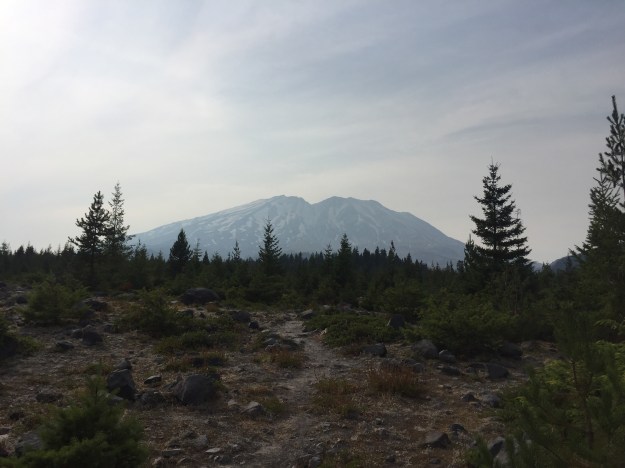
The successful conference was marred only by haze drifting down from fires in British Columbia and Washington state, leading to polluted air in Portland reminiscent of that in Singapore during Indonesia’s burning season.

haze_Portland

Haze in Portland, August 2017


IMG_8562

Mount St. Helens, to the north of Portland, shrouded in a light haze

International Congress for Conservation Biology in Cartagena, Colombia

Last week Ryan attended the International Congress for Conservation Biology (ICCB) in the historic city of Cartegana, Colombia. This conference brought together over 2,000 people to discuss global conservation issues. Ryan presented the lab’s work on extinctions in Singapore as part of a session titled “What are we willing to lose? Reframing adequacy to achieve conservation outcomes”.

2017-07-27-PHOTO-00007968

Two students join the lab for summer internships

Two students have joined our lab this summer for internships.

Laura Berman is a recent graduate of Juniata College in the US. For her internship she is working with David Tan and Nadiah Kristensen on the undetected extinctions project. She is compiling a database of all of the records of reptiles and freshwater decapods known from Singapore based on the specimen catalogue of the Lee Kong Chian Natural History Museum as well as archived journal articles in order to find the complete list of dates that each species has been recorded in Singapore. She is also updating specimen records at the National Herbarium and adding missing specimens to the BRAHMS database so that a similar list can be compiled for the plants of Singapore. This information will be used to calculate the number of species that went extinct in each taxonomic group, and also to estimate statistically the number of undetected extinctions—extinctions of species that occurred before the species could even be discovered.

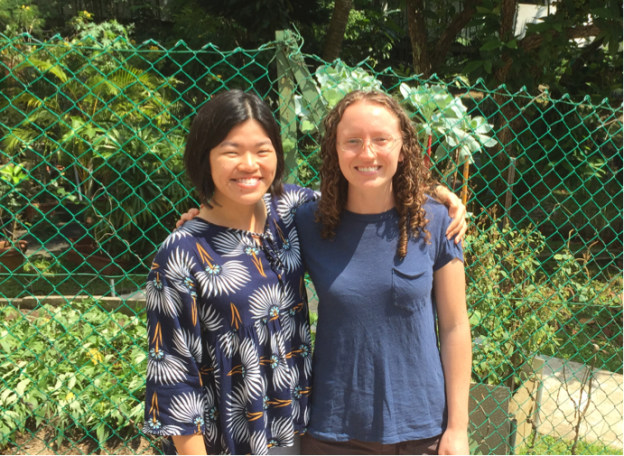
Phua Yu Ning is an undergraduate majoring in Physics and Applied Physics at Nanyang Technological University. She is working with Tak Fung on modelling the biodiversity and biogeography of small islands. She is learning to analyse the stochastic master equations of the Unified Neutral Theory of Biodiversity and Biogeography and related theories to predict archipelago species–area curves for taxa including plants, birds, insects and mammals.

Yu_Ning_and_Laura

Yu Ning and Laura


British Ecology Society Macroecology annual meeting in London

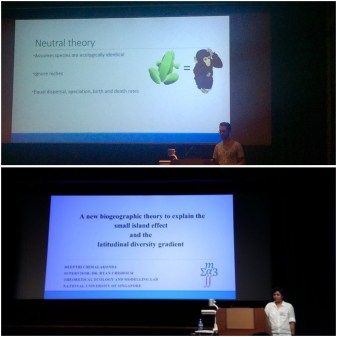
Last week Sam and Deepthi attended the British Ecological Society Macroecology conference held at the Natural History Museum in London, UK. Sam presented his work on building spatially explicit neutral models at very large scales and the importance of long distance dispersal. Deepthi talked about her ongoing PhD work that examines diversity maintenance mechanisms on islands and the role of immigration in shaping latitudinal diversity gradients.

Both of them got a ‘behind-the-scenes’ tour of the spirit collection and the fossil mammal collection at the museum. They saw a giant squid, a Toxodon, and some of Darwin’s personal collections. They also learnt about evidence of cannibalism from early human fossils.

IMG_5839.jpgIMG_5835.jpg

IMG_20170707_162526.jpg

Giant squid at the Natural History Museum

Aloysius successfully defends his PhD thesis

Congratulations to Dr. Aloysius Teo for successfully defending his PhD thesis! Aloysius’ thesis is titled “Influence of biodiversity on ecosystem function in primary and secondary forests of Singapore: microclimate, litterfall, and decomposition”. His results improve our understanding of how ecosystem function in tropical secondary forests differs from that in primary forests—an especially important topic given that vast regions of the tropics are now dominated by secondary forests.

IMG_8241

Visit to University of Göttingen in Germany

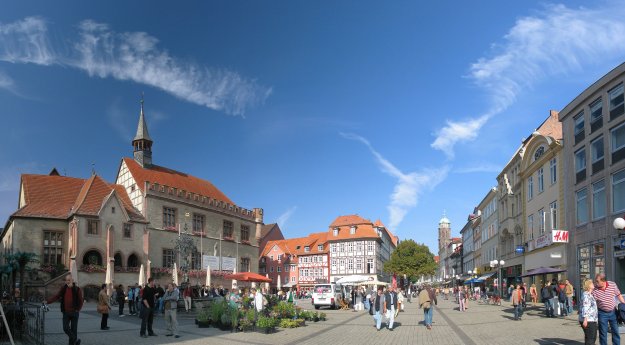
Ryan just returned from a trip to Germany to visit Holger Kreft’s lab at the University of Göttingen. He presented a seminar and discussed shared interests on the topic of island biogeography. He also learnt about the lab’s ecological research across Indonesia, from Sumatra to New Guinea. Göttingen has a history of working in Indonesia and training Indonesian scientists, going back to the 1980s.


Catharina attends Indo-Pacific Amphibian Symposium in Borneo

Catharina recently went to Sarawak in Borneo and attended the Indo-Pacific Amphibian Symposium held at Universiti Malaysia Sarawak (UNIMAS). The symposium comprised numerous presentations on ecology and conservation of amphibians in the region. Catharina also attended the annual Borneo Frog Race (also organised by UNIMAS) at the Gunung Gading National Park. This is a public outreach event aimed at creating awareness of and enthusiasm for amphibians among the public. The day was filled with workshops and the race itself, which is a race by the participants (not a race by the frogs themselves), in which each participant aims to find and photograph as many frog species as possible in a fixed amount of time.

Visit to Mathematical and Computational Biology group at the University of Melbourne

Last week Ryan visited members of the Computational Biology Research Initiative at the University of Melbourne. This research initiative seeks to facilitate interdisciplinary research in computational biology, between departments and schools within the university, and with external researchers. The university has also recently started up an undergraduate programme in Computational Biology.

Ryan presented a seminar, as part of the Mathematical and Computational Biology seminar series, about our lab’s recent work on island biogeography. He met with researchers whose work applies mathematical and computational techniques to a range of topics including epidemic diseases, cell biology and genetics.

binary-codes-for-web

Anne Chao visits the lab

Anne Chao from National Tsing Hua University visited the lab last week to meet with students and staff and to present the weekly departmental seminar. Anne is well known for her extensive and rigorous contributions to ecological statistics and biodiversity estimation (including the Chao1 and Chao2 indices). Anne’s seminar was very well received, and our discussions with her stimulated new ideas for developing our own work on estimating undetected extinctions.

chao