
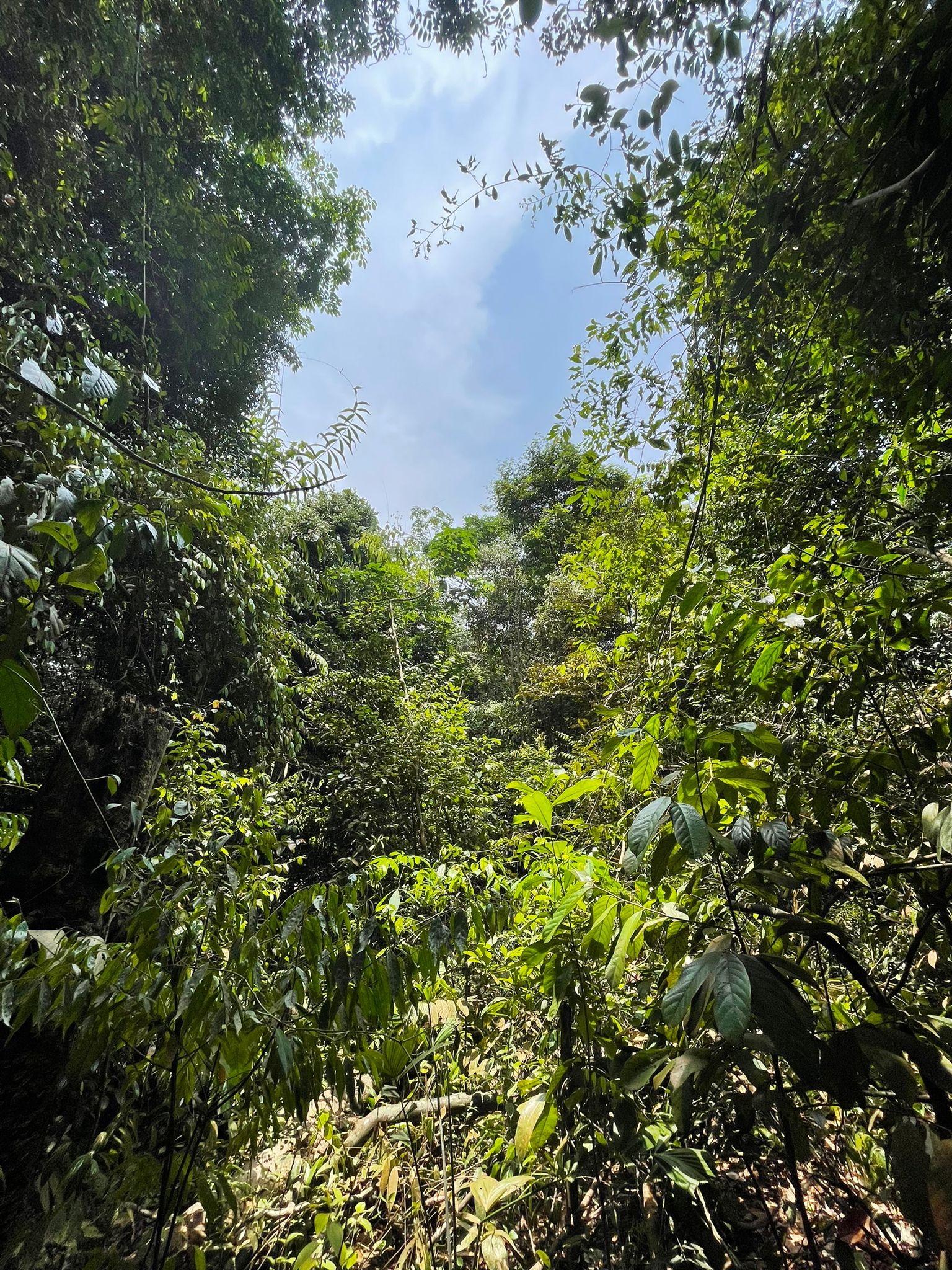
Kong Fanhua was a visiting PhD student in our lab in 2022–2023, during which time she worked on a study of tropical forest gap diversity that has just been published in Ecology. Forest gaps are created when large trees fall. Gaps experience greater below-canopy light levels than non-gaps and thus see increased recruitment of young trees. It has long been hypothesised that forest gaps have higher tree diversity than non-gaps, but surprisingly until now there has not been a satisfactory statistical test of the hypothesis. We focussed our analyses on the 50 ha forest plot on Barro Colorado Island in Panama, leveraging regular forest census data going back decades, as well as canopy-height survey data that facilitated gap identification.
Our main finding was that although the average number of tree species in any given gap was only slightly higher than a same-sized non-gap site, collections of gaps had many more species than similar collections of non-gaps. We identified 124 newly formed gaps (each 25 m2) in 2003 and when these were seven years old they contained 149 tree species in total compared to only 109 tree species in a comparable collection of non-gap sites. Qualitatively similar, but somewhat weaker, results were observed when the gaps were two and 12 years old. These notable differences between gaps and non-gaps strongly indicate an important role for gaps in the maintenance of plot-level tree diversity.
Fanhua now holds a post-doctoral research position at the Nanjing Institute of Environmental Sciences.
 Chisholm Lab